Highland farmers drive digital economy to spread Vietnamese “Taobao villages”
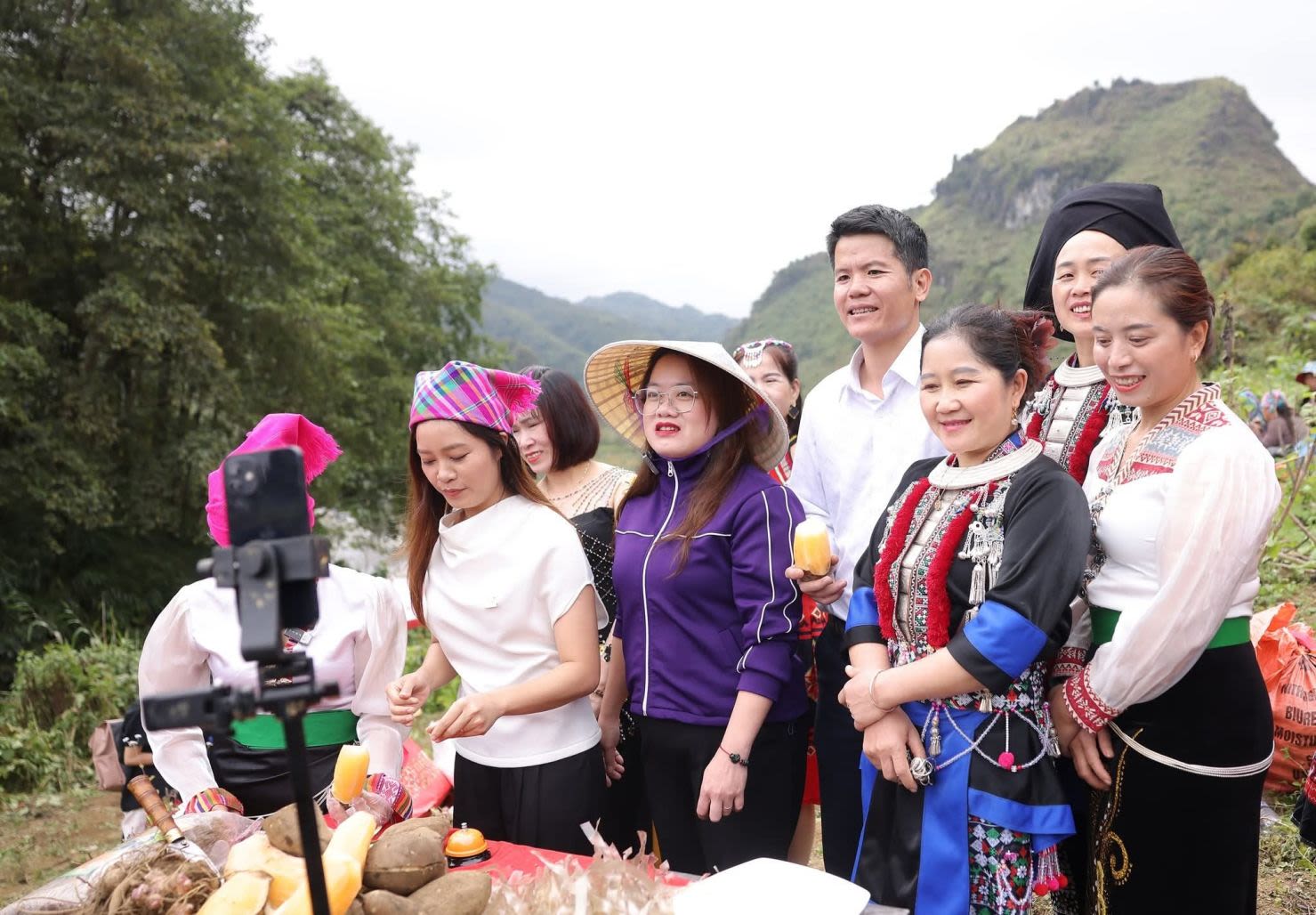

Highland farmers drive digital economy
Amid mountain peaks shrouded in cloud all year round, a quiet yet powerful revolution is taking place. Hands once accustomed only to holding hoes and sowing maize now glide across smartphone screens. Once held by the haunting grip of poverty and prejudice, farmers from ethnic minority communities have stepped beyond fear to write an inspiring story in the digital space.
After livestream sessions attracting millions of views, after the life-changing tears of Ma Thi Chu, Vu Thi Xia, and Dang Thi Tho, a quiet but unavoidable question gradually emerges: What will happen if these exceptional individuals are no longer there?
The digital economy in the highlands, ultimately, cannot rely solely on individual courage. If Vietnamese versions of “Taobao (China’s e-commerce model) villages” are to spread widely and endure, they require more than inspirational taps on a phone screen. They need a supportive ecosystem in which the State, businesses, and social organisations stand alongside farmers — not to do things for them, but to accompany them long enough and deeply enough for people to move forward on their own.
Silent “midwives”
In the highlands, what farmers lack is not only capital or skills, but the belief that they can go far. For many years, support programmes often consisted of training sessions delivered merely to meet targets, with documents distributed and then left aside. Yet the digital economy cannot grow in such a way. Successful models in Sin Ho, Muong Khuong, Muong Lay, and Chi Lang share a common feature: support did not begin with directives, but with opening doors — opening Internet access, infrastructure, and mindsets. Once the first door was opened, people could see a new path for themselves.

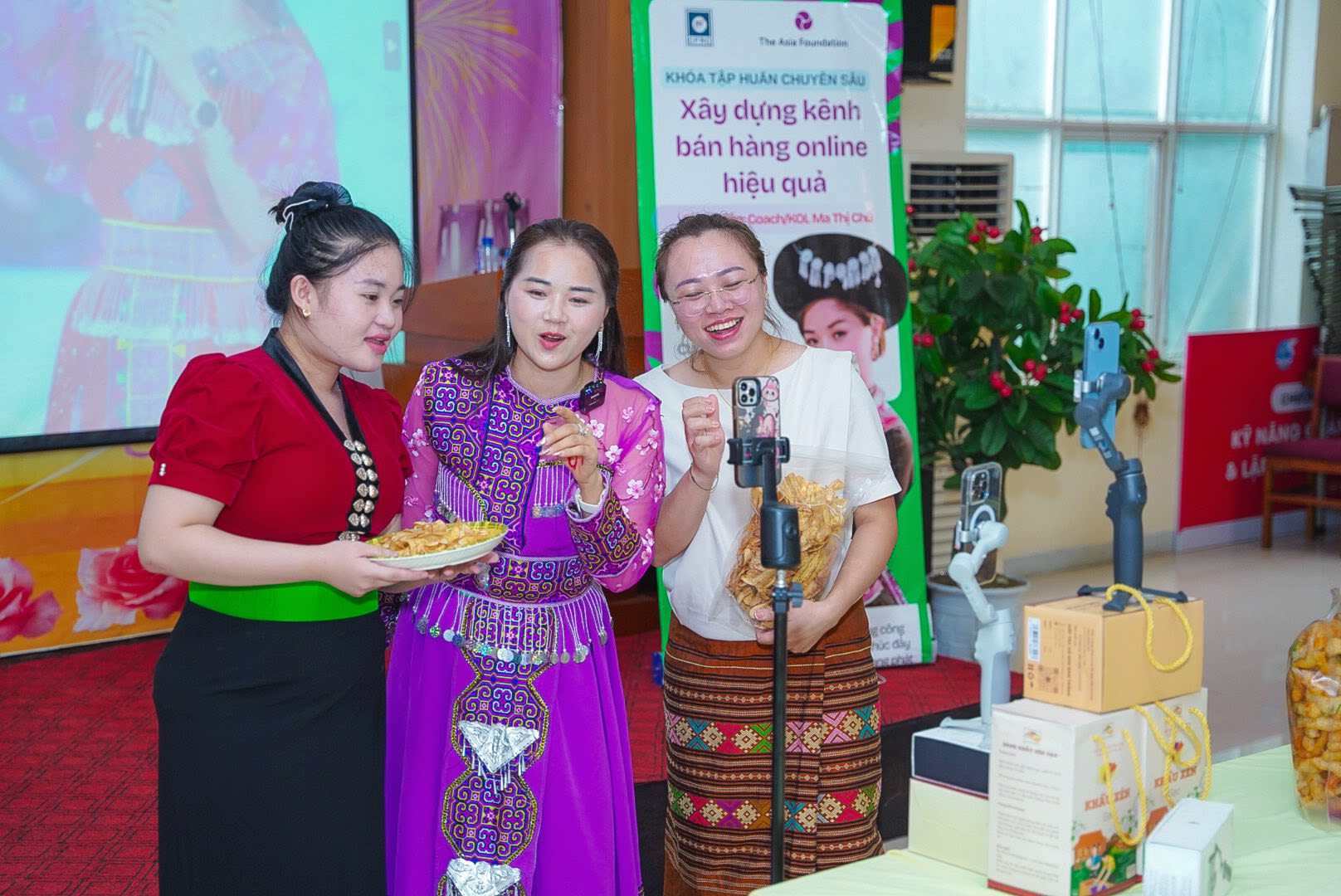
Farmers in Dien Bien participate in an intensive training course on “Building an effective online sales channel.”
Farmers in Dien Bien participate in an intensive training course on “Building an effective online sales channel.”
In many highland communes, securing a stable internet connection has already marked a turning point. The Internet, once unfamiliar, has become a new means of production.
Few realise that behind livestream sessions broadcast from sweet potato fields or custard apple orchards lies the steady support of social organisations and platform and logistics enterprises — silent “midwives” who do not appear before the camera but are always present at crucial moments.
In the small hall of Sin Ho commune, amidst the murmurs of women who had just left the fields, Tran Thi Tan – Director of Corporate Social Responsibility at TikTok Shop – did not begin her presentation with numbers or plans. She started by calling Sin Ho a “land waiting to be awakened,” a place with abundant valuable products, a close-knit community, and most importantly, a clearly evident spirit of progress in the eyes of the listeners.
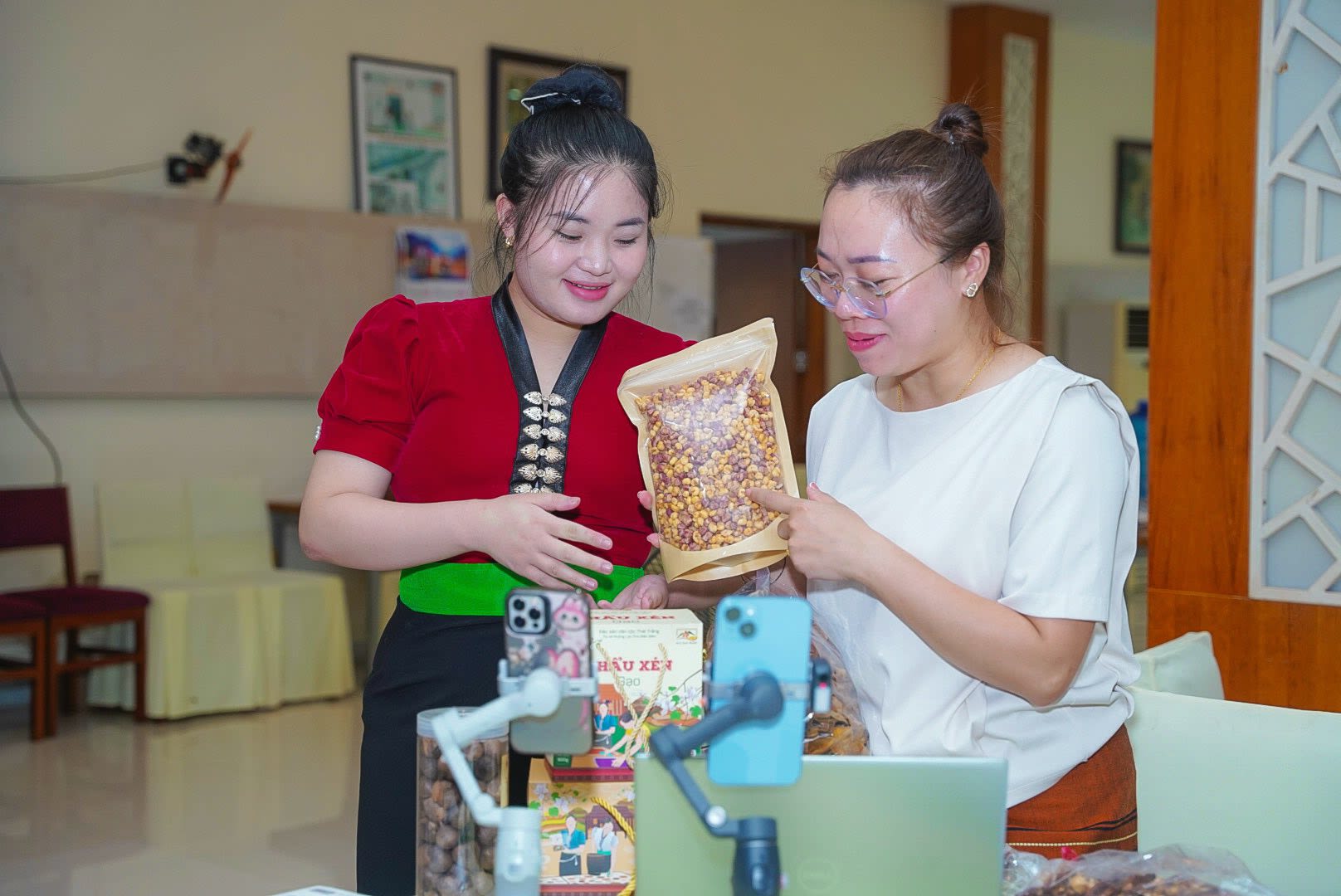
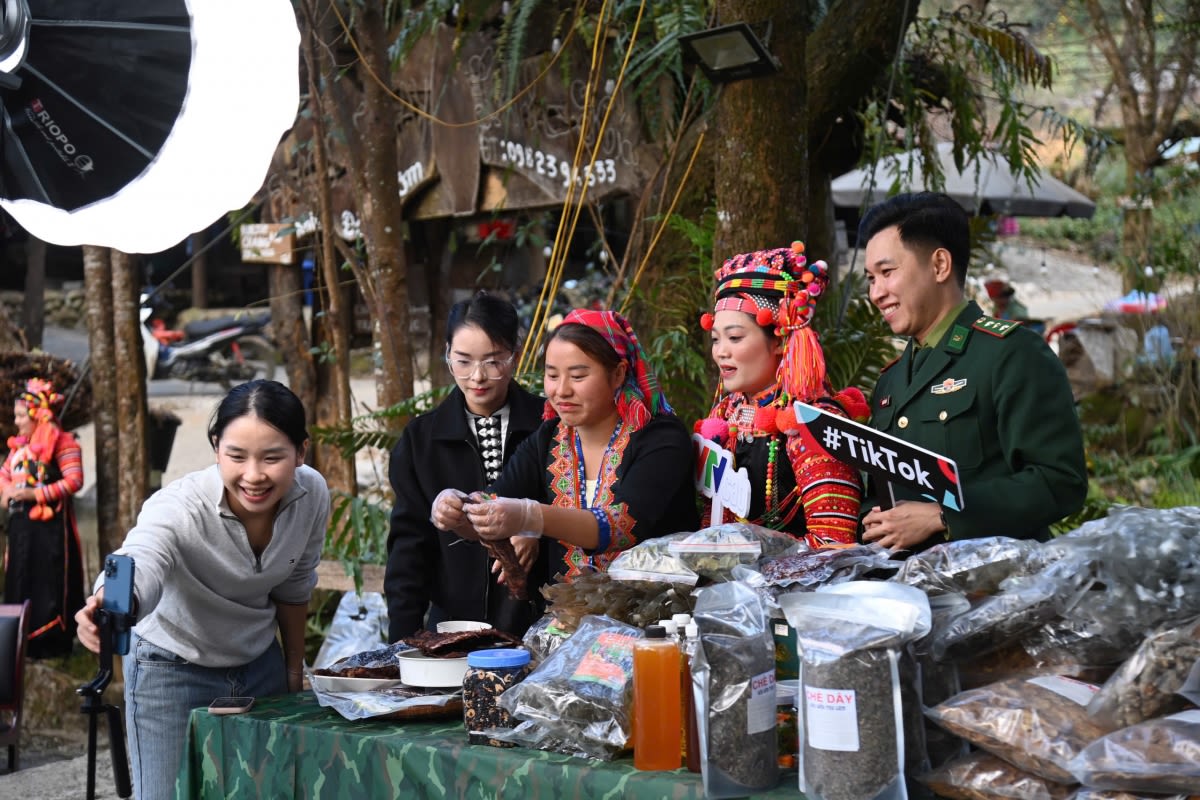
Women in Tua Chua commune (Dien Bien province) are practicing online sales of processed agricultural products.
Women in Tua Chua commune (Dien Bien province) are practicing online sales of processed agricultural products.
According to Tan, the TikTok Shop initiative, “Sin Ho on the Rise” is not a short-term trade promotion programme. It is an effort to test a model for implementing national policies at the commune level, where technology and e-commerce do not precede the people, but move alongside them.
A notable aspect of TikTok Shop’s approach to mountainous regions is that they don’t aim to create “sales stars,” but prioritise two fundamental elements: training and community building. Training programmes not only teach video creation and store setup, but also gradually cultivate a modern business mindset – where farmers understand what they are selling, to whom, and through what story.

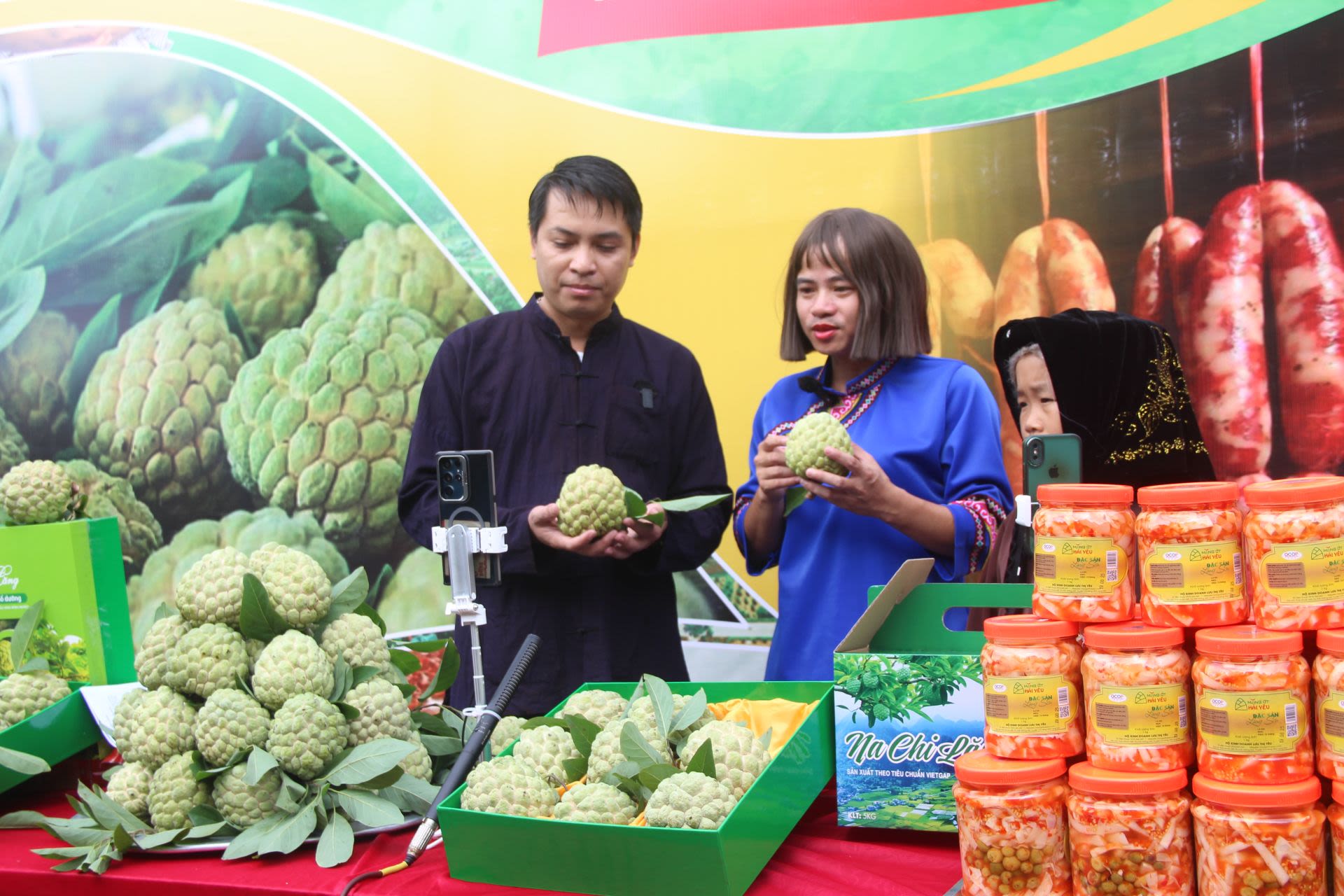
Vi Thien Chien (left), Chairman of the People’s Committee of Chi Lang commune, livestreams selling custard apples.
Vi Thien Chien (left), Chairman of the People’s Committee of Chi Lang commune, livestreams selling custard apples.
Simultaneously, they encourage groups of highland farmers to learn together, work together, make mistakes together, and correct them together. When e-commerce is no longer a personal race but becomes a community activity, the fear of failure is divided, risks are reduced, and perseverance increases.
Following Sin Ho, according to TikTok Shop’s direction, this model will continue to be surveyed and expanded to many other localities. The goal is not just to increase revenue, but to build sustainable livelihoods, especially for female farmers in mountainous areas – who have long been marginalised in the market economy.

Partnership to go further
In Dien Bien, Tuan Giao, and Muong Lay, The Asia Foundation’s projects have chosen a slow but steady approach: organising classes right in the village cultural centres, where women feel most confident and safe. They teach technology, starting with very real-life questions: “Why am I still not getting any customers?”, “Why do customers return orders even after receiving them?”…
There, learners are not pressured into becoming “good salespeople”, but are helped to become confident individuals. This distinction is vital. For if they cannot overcome the fear of being seen, every tool becomes meaningless.

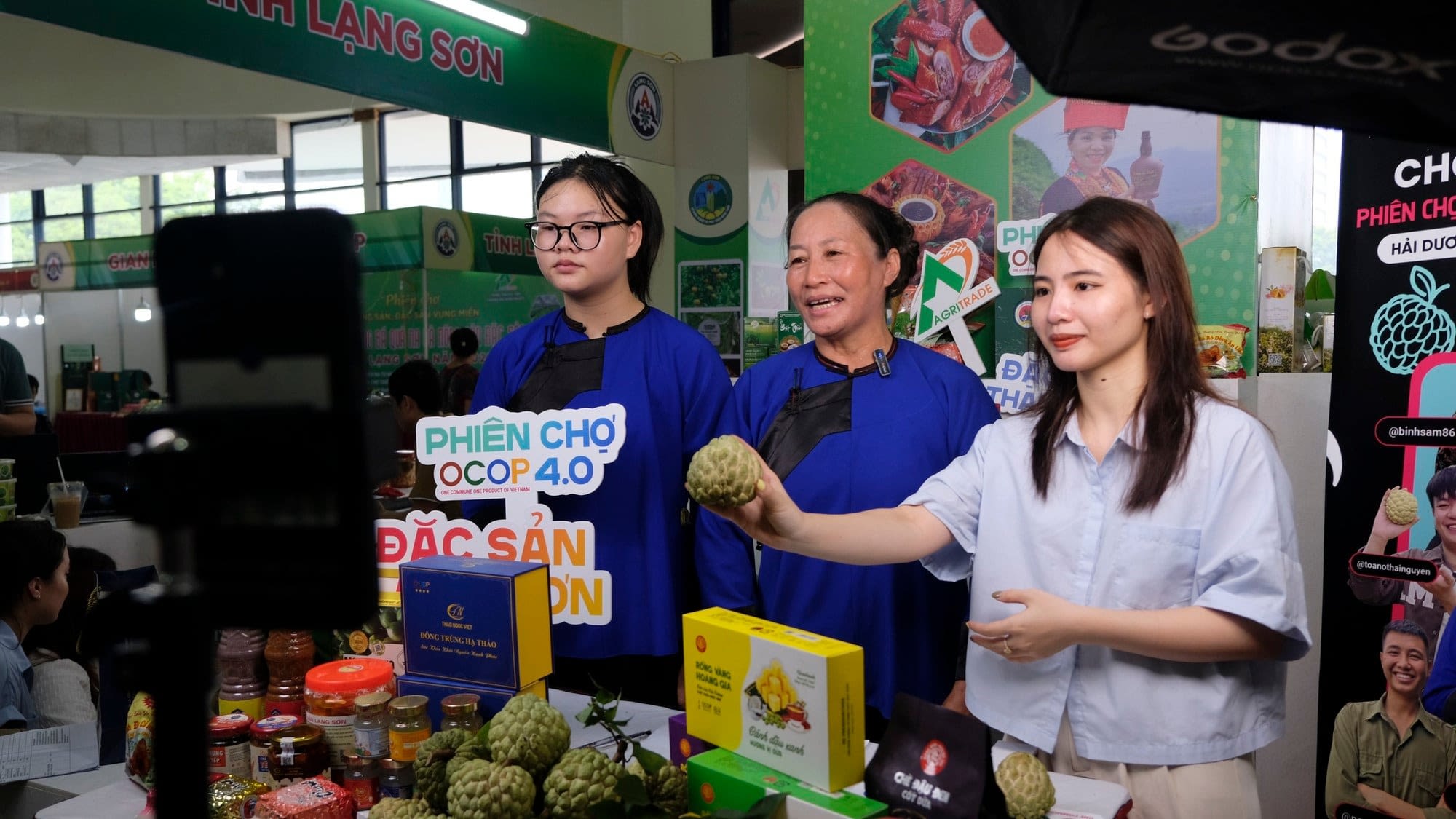
Lang Son farmers at the “OCOP 4.0 market fair”.
Lang Son farmers at the “OCOP 4.0 market fair”.
Alongside social organisations, digital platforms such as TikTok Shop and logistics enterprises have, intentionally or otherwise, become the backbone of the highland digital economy. By simplifying procedures for setting up online shops, accelerating shipping connections and ensuring transparent reconciliation processes, they have reduced farmers’ sense of being “lost” in the digital world.
A typical example is the “OCOP market fair” programme launched by TikTok Viet Nam, which has opened a new pathway for local speciality produce. Rather than leaving farmers to navigate alone, in-depth livestream skills training sessions are organised directly in fields and villages, transforming those once familiar only with hoes into compelling storytellers in the online space.

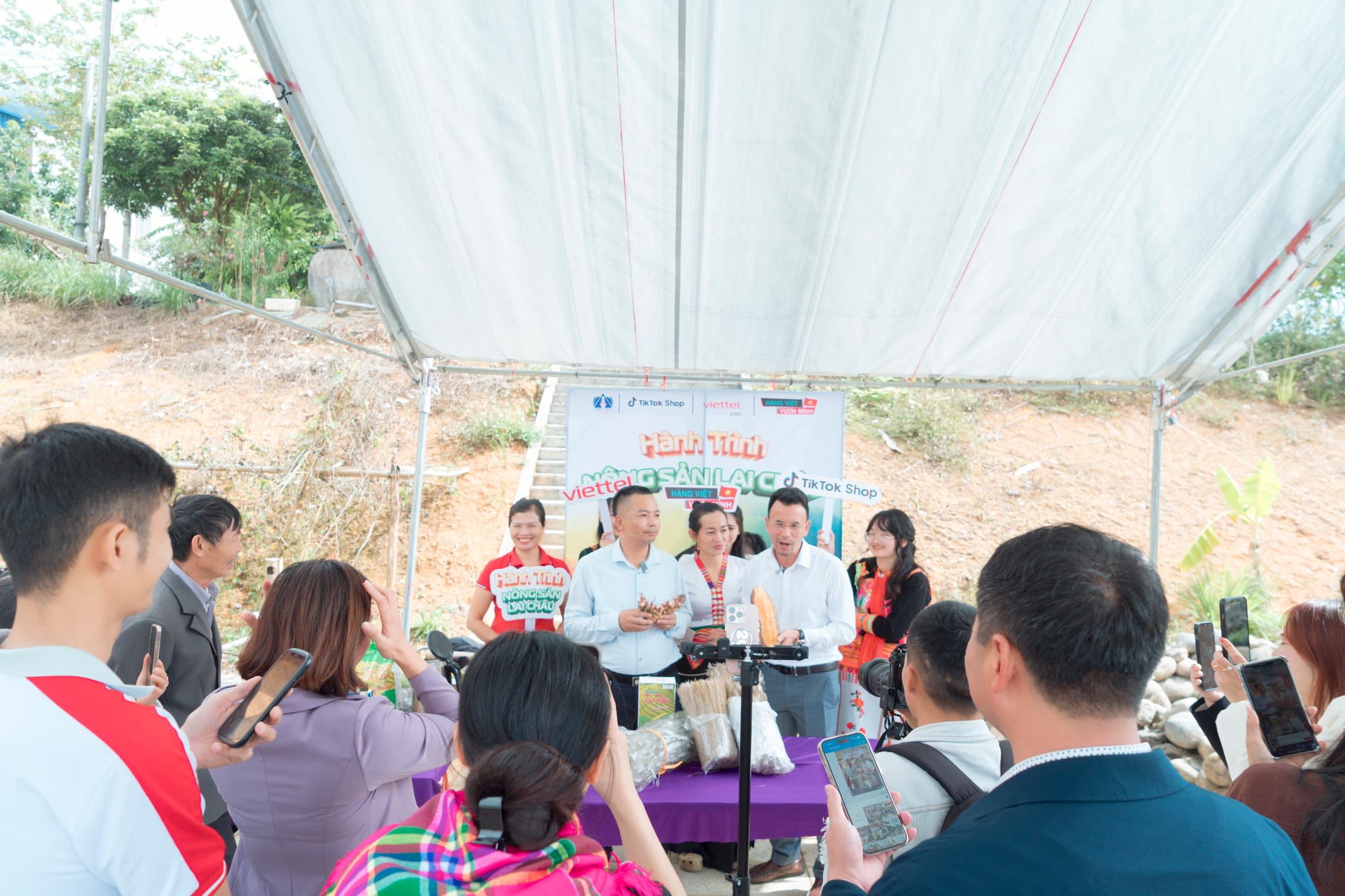
Leaders of Binh Lu Commune (Lai Chau Province) go live alongside residents to sell agricultural produce.
Leaders of Binh Lu Commune (Lai Chau Province) go live alongside residents to sell agricultural produce.
It is precisely the fusion of modern algorithms with the genuine value of agricultural products that has turned livestreams into more than mere sales channels; they have become a “cultural stage” where the essence of the highlands is introduced directly to millions of users at home and abroad.
Postal enterprises have also entered the field with creative models. The image of “Digital Postmen” from Viettel Post travelling to the remotest villages is not only about delivering parcels, but also about delivering knowledge. They provide hands-on guidance, helping residents upload products onto the Voso e-commerce platform and supporting proper packaging procedures on site to ensure the quality of agricultural goods during long-distance transport.


Dang Thi Tho is one of 300 delegates attending the KOL Conference in the era of national resurgence.
Dang Thi Tho is one of 300 delegates attending the KOL Conference in the era of national resurgence.
The presence of professional logistics services at people’s doorsteps has dispelled concerns over costs and operational risks, creating a closed and reliable supply chain that enables highland farmers to confidently confirm orders without fear of geographical distance.
Alongside social organisations and businesses, local authorities are also learning to walk alongside citizens rather than stand above them. In Lai Chau, Le Ba Son — Chairman of the People’s Committee of Sin Ho Commune — and Luong Thi Thanh Nga — Chairwoman of the Women’s Union of Sin Ho Commune — have taken part in the community’s digital market sessions under the initiative “Sin Ho Rising”.
Son said that before gaining access to e-commerce platforms, local residents mainly collected agricultural produce themselves and sold it at wholesale markets for distribution both within and beyond the province. Today, with just a smartphone, villagers have an additional and more effective sales channel, enabling them to reach a far wider customer base directly.

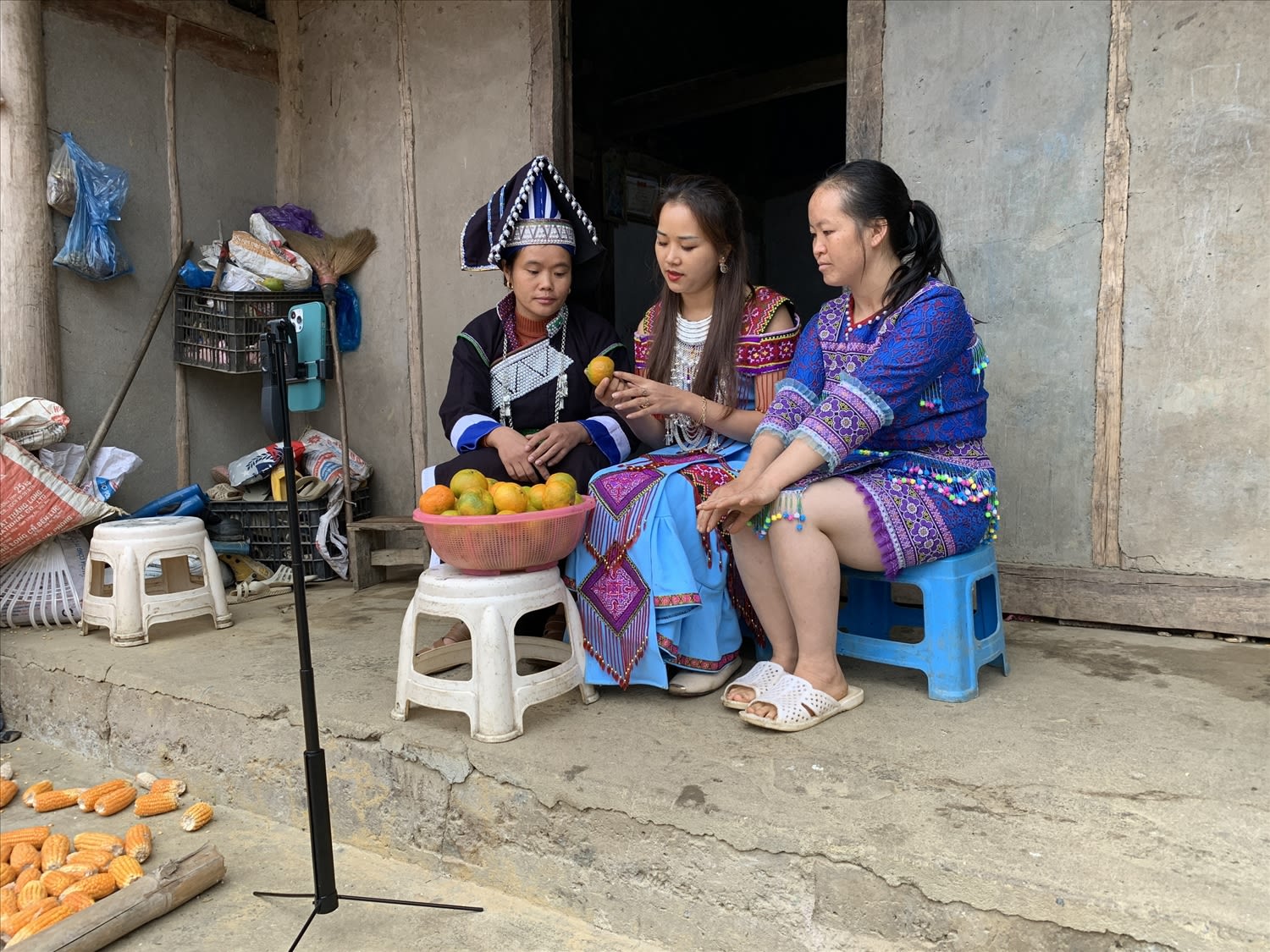
Farmers in Muong Khuong (Lao Cai) learn how to livestream to sell tangerines.
Farmers in Muong Khuong (Lao Cai) learn how to livestream to sell tangerines.
According to Son, this approach has helped to facilitate the consumption of local agricultural produce. He added that the commune has recently established a community digital technology team, working in coordination with relevant agencies to organise training sessions and guide residents in installing and using applications, gradually enabling them to take the initiative in selling products in the digital environment.
It is clear that the role of the authorities does not lie in “selling on behalf of” residents, but in creating a safe framework: providing legal support to combat counterfeit goods, standardising packaging processes, ensuring traceability of origin, and linking raw material areas into production clusters. These are quiet tasks, rarely seen on camera, yet without them the entire ecosystem could collapse after just a single harvest season.

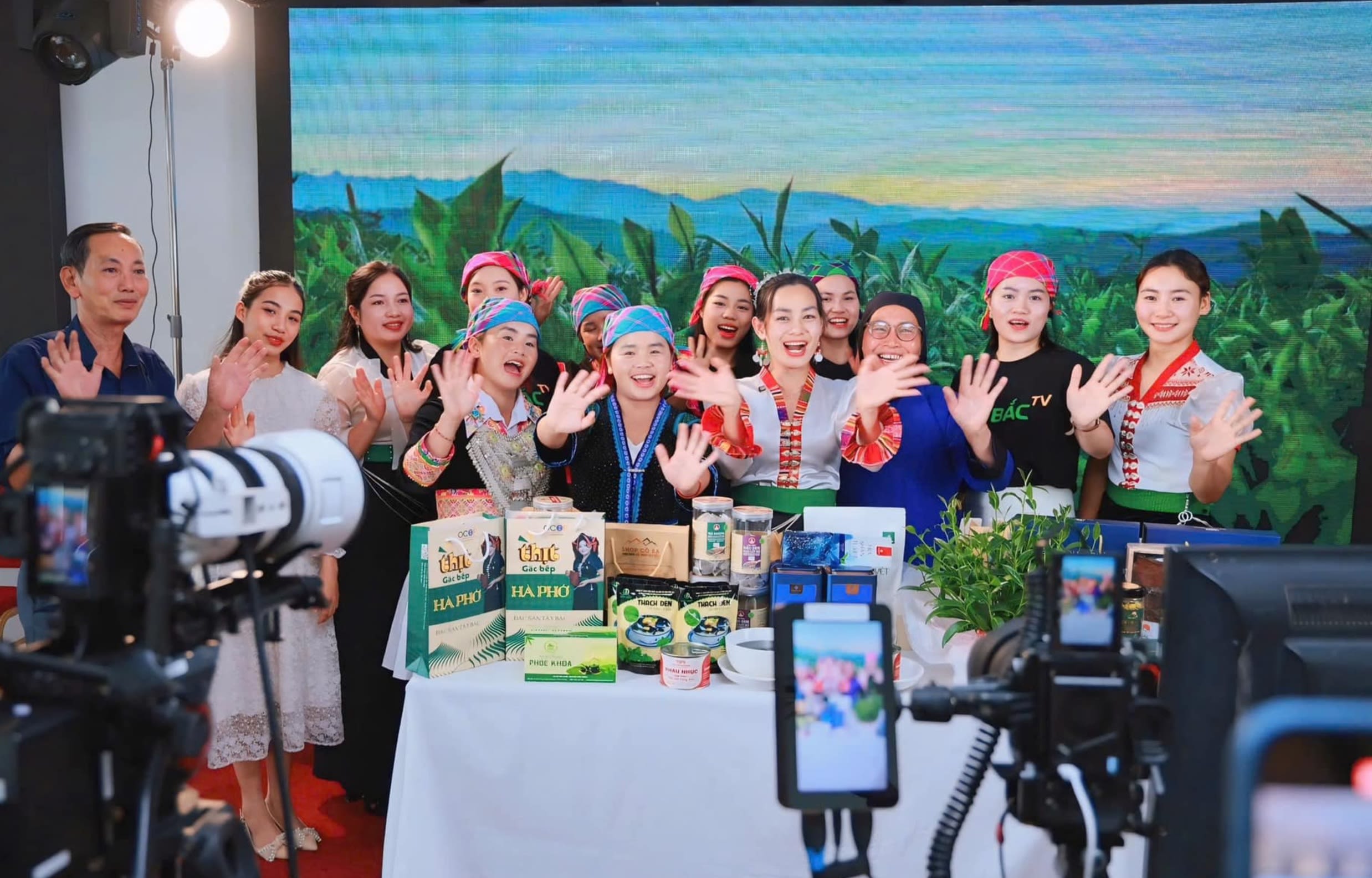
Digital transformation is not merely a technological story
Speaking at a meeting with highland women engaged in the digital economy, Le Hoang Oanh — Director General of the E-commerce and Digital Economy Agency under the Ministry of Industry and Trade — offered a different perspective on digital transformation: gender equality. According to her, when rural and mountainous women are equipped with digital skills, they not only improve their household livelihoods but also become catalysts driving the local economy.
However, she also candidly pointed out unavoidable barriers: uneven internet infrastructure, high logistics costs, and in particular the absence of “on-site guides” — individuals who understand both technology and the realities of village life.

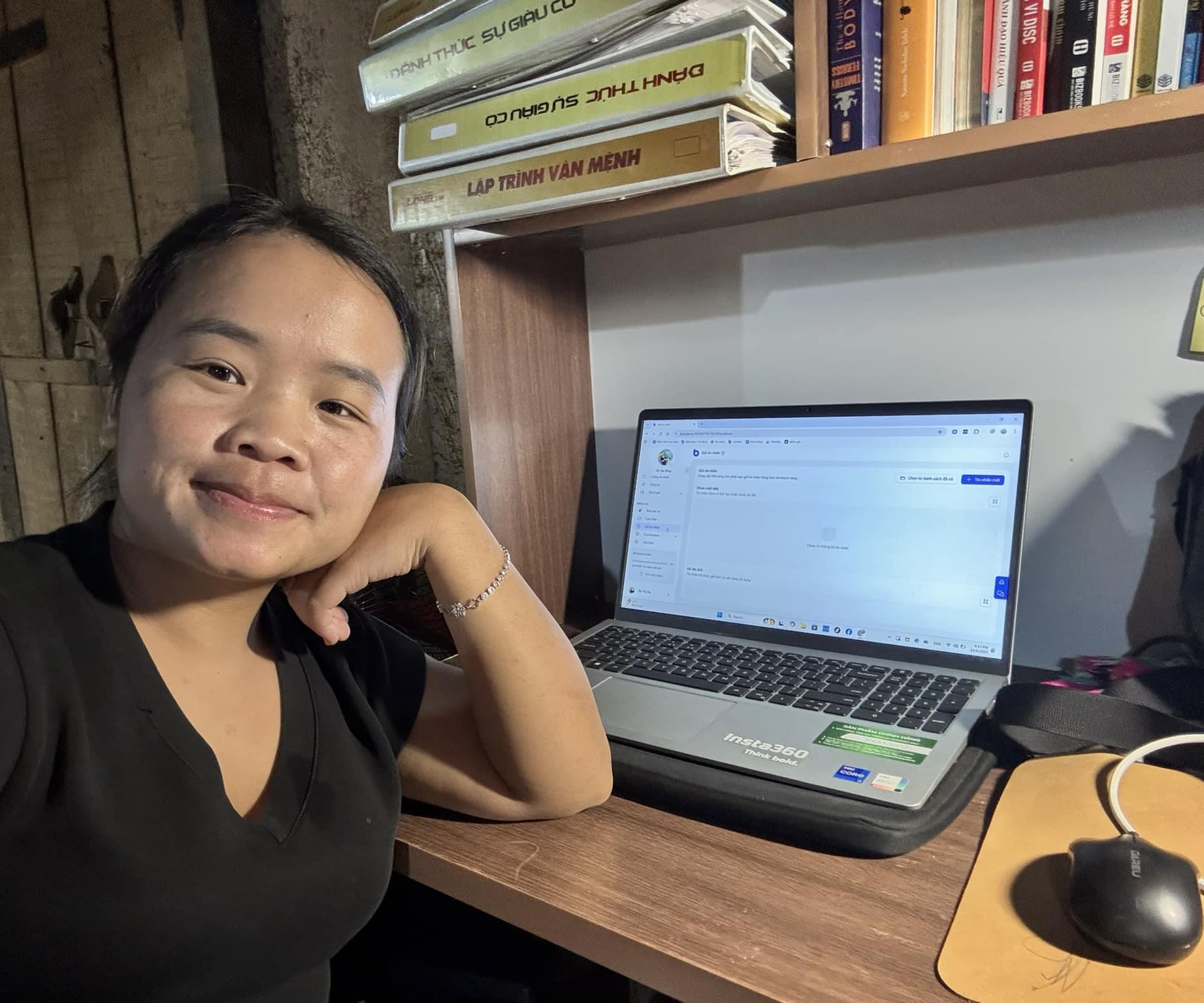
Vu Thi Xia began teaching herself how to use a computer in order to manage orders more effectively.
Vu Thi Xia began teaching herself how to use a computer in order to manage orders more effectively.
Amid the rapid rise of AI, Oanh believes that genuine emotion and human sincerity remain the “golden key”. It is precisely this authenticity that enables livestream sessions held in the middle of fields and terraced hillsides—where sellers share their own life stories—to retain enduring appeal among urban consumers. Figures such as Ma Thi Chu and Vu Thi Xia, despite lacking cinematic techniques, have created videos that resonate with millions. Today’s customers no longer consume solely with their taste buds, but also with empathy. That is why livestreams broadcast from the fields, where sellers recount their personal journeys, continue to captivate city audiences.
Notably, the cooperation between the Agricultural Trade Promotion Centre (under the Ministry of Agriculture and Environment) and TikTok Shop since 2023 has opened up a new pathway for the One Commune One Product (OCOP) programme. Local products are no longer confined to display stands but are entering digital media campaigns with wide-reaching impact. Many co-operatives and small enterprises have, for the first time, gained structured access to e-commerce.
From skills training and legal–tax support to “Go Online” campaigns, an ecosystem is gradually taking shape—not through a fleeting movement, but through modest training sessions, the first trembling livestreams, and orders that may arrive late yet steadily.

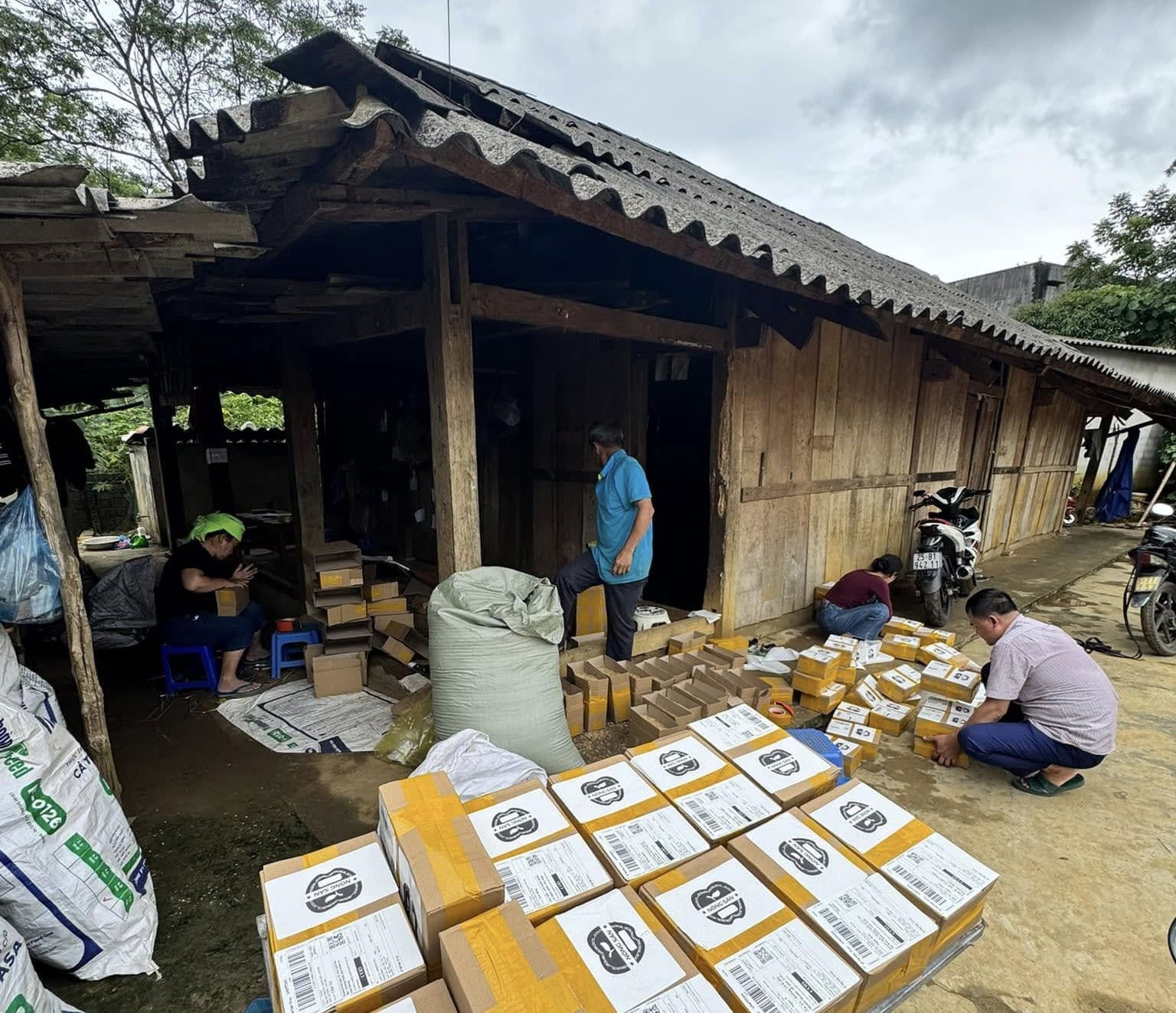
From simple homes of Mong families, hundreds of orders of local agricultural produce are packaged and shipped across the country.
From simple homes of Mong families, hundreds of orders of local agricultural produce are packaged and shipped across the country.
Stories of success in Sin Ho, Muong Khuong and Cai Kinh clearly demonstrate that Vietnamese “Taobao villages” are not an unattainable dream. Yet for such villages to flourish widely, reliance on a few outstanding individuals will not suffice. What is needed is an ecosystem inclusive enough that the less advantaged are not left behind, and patient enough that the talented are not left to stand alone.
When technology is placed in its proper role - serving people rather than directing them - highland farmers can confidently step into the digital economy on their own terms. And at that point, online markets amid the vast mountains will not merely sell agricultural produce, but also convey a renewed belief: that Vietnamese farmers can rise, provided they are accompanied on the journey.
Published: February 2026
Production managers: Hoang Nhat – Hong Van
Content: Thanh Tra – Minh Tam
Translation: NDO
Design: Minh Chau
 Built with Shorthand