
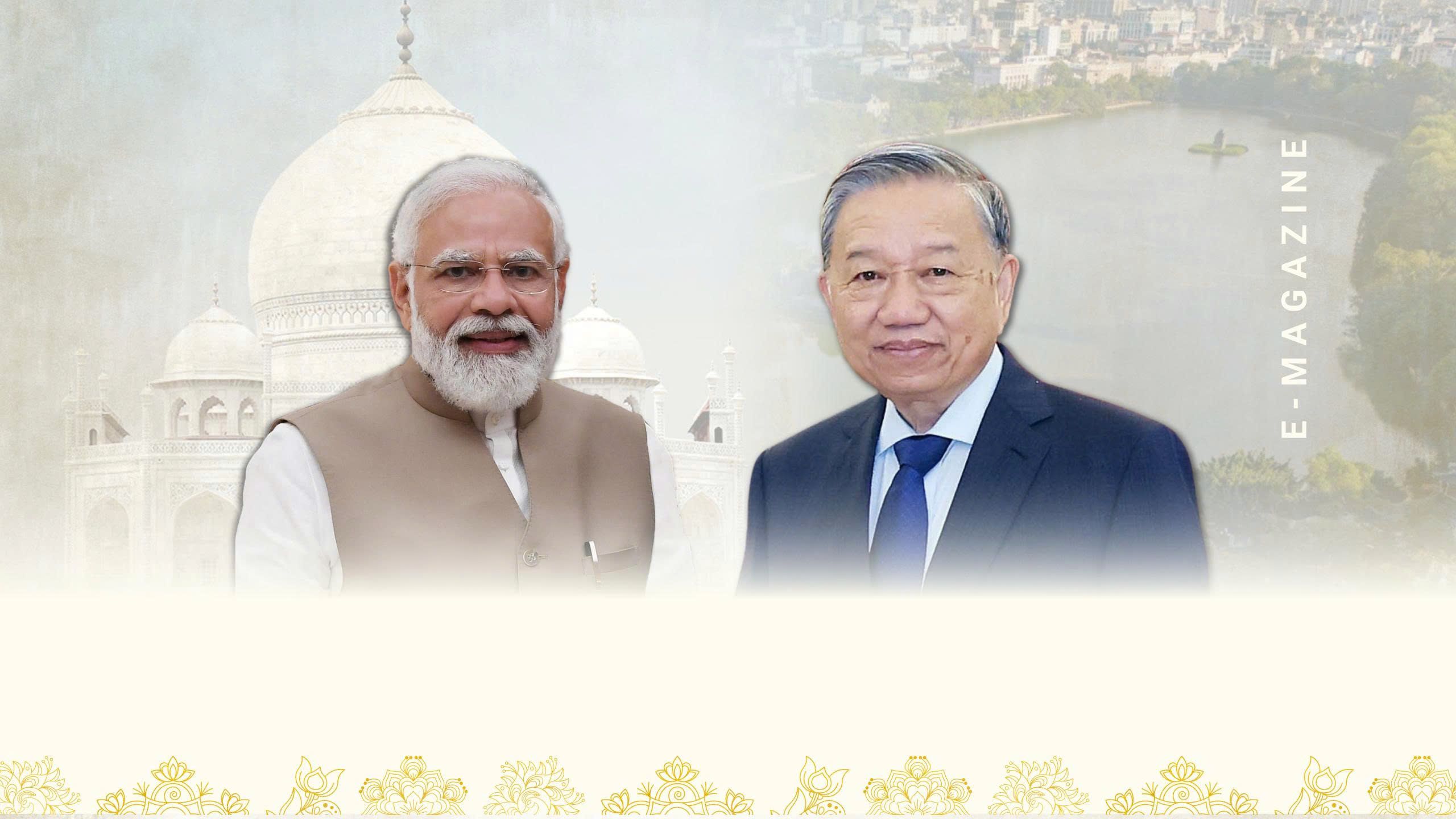

At the invitation of Indian Prime Minister Narendra Modi, General Secretary and President To Lam, together with a high-ranking Vietnamese delegation, is paying a state visit to India from May 5 to 7.
The visit holds special significance, taking place in 2026 — the year marking the 10th anniversary of the Viet Nam-India Comprehensive Strategic Partnership, a landmark in the history of bilateral relations.
This is the second overseas visit by General Secretary and President To Lam, following the National Assembly’s approval of key state leadership appointments. It reflects Viet Nam’s strong commitment to deepening ties with India, elevating the relationship to a higher level that is more effective, robust and substantive.


On September 23, 2024 (New York time), on the sidelines of the 79th session of the UN General Assembly, General Secretary and President To Lam met Prime Minister Narendra Modi during his working visit to the US.
On September 23, 2024 (New York time), on the sidelines of the 79th session of the UN General Assembly, General Secretary and President To Lam met Prime Minister Narendra Modi during his working visit to the US.
India’s economic and diplomatic standing
In recent years, India has emerged as a notable success story in regional economic development, while steadily enhancing its international standing through a balanced and independent foreign policy. These factors have enabled the South Asian country to remain resilient and sustain strong growth amid an increasingly volatile and contested global environment.
India’s political landscape has remained stable. On June 4, 2024, the National Democratic Alliance (NDA), led by Prime Minister Narendra Modi’s Bharatiya Janata Party (BJP), won the 18th Lok Sabha election. Prime Minister Modi’s government continues to pursue domestic reforms aimed at transforming India into a developed country by 2047, the centenary of its independence.
Economically, India has become the world’s fourth-largest economy and continues to be a driver of global growth. The Indian economy has expanded beyond expectations, with growth of 8.2% in the third quarter of 2025, while GDP growth in the 2025-2026 fiscal year is projected to reach more than 6.5%. The government is channelling significant investment into emerging industries, particularly semiconductors, green hydrogen, and electric vehicles, while accelerating negotiations on free trade agreements (FTAs) with key partners.


Indian Prime Minister Narendra Modi (centre), together with leaders of the National Democratic Alliance (NDA) led by the Bharatiya Janata Party (BJP), celebrates the NDA’s victory in New Delhi on June 4, 2024. (Photo: AA/VNA)
Indian Prime Minister Narendra Modi (centre), together with leaders of the National Democratic Alliance (NDA) led by the Bharatiya Janata Party (BJP), celebrates the NDA’s victory in New Delhi on June 4, 2024. (Photo: AA/VNA)
A flexible diplomatic policy has been a particularly important factor enabling the South Asian nation to reap significant achievements on its development path. India’s role and position in the region and the world are increasingly growing. India is pursuing a multi-alignment foreign policy, maintaining good and balanced relations with other countries.
The South Asian nation is striving to affirm its role as a “leader of the Global South”, step up its “Act East” policy, continue strengthening its comprehensive strategic partnership with ASEAN, and commit to working with ASEAN to build a free, open and inclusive Indo-Pacific, in line with ASEAN’s central role in the region.
India actively participates in multilateral institutions, is striving to become a non-permanent member of the United Nations Security Council, is a member of BRICS, the group of leading emerging economies, leads many regional and global initiatives, and successfully assumed the chairmanship of the Shanghai Cooperation Organisation (SCO) and the Group of Twenty (G20) in 2023.
An enduring friendship
Viet Nam and India share a traditional friendship and long-standing close ties, which are valuable assets of both countries. Buddhist links are clear evidence of the depth of historical, cultural, and religious exchanges and connections between the two nations.
Viet Nam has always received the active, strong, and substantive support of the government and people of India in its struggle for national liberation as well as in national construction and development.


Prime Minister of India Narendra Modi visits Quan Su Pagoda during his official visit to Viet Nam on September 3, 2016. (Photo: VNA)
Prime Minister of India Narendra Modi visits Quan Su Pagoda during his official visit to Viet Nam on September 3, 2016. (Photo: VNA)
The two countries officially established diplomatic relations in 1972. On May 1, 2003, the two sides signed the Joint Declaration on the Comprehensive Cooperation Framework between Viet Nam and India entering the 21st century. On July 6, 2007, the two countries upgraded their relations to a strategic partnership, and on September 3, 2016, elevated them to a comprehensive strategic partnership.
On December 21, 2020, the two countries adopted the Viet Nam–India Joint Vision Statement on Peace, Prosperity, and People. On August 1, 2024, the two countries adopted a joint declaration on strengthening the Viet Nam–India Comprehensive Strategic Partnership.
Bilateral relations between the two countries across Party, State, National Assembly, and people-to-people channels have continued to expand and deepen. The two sides have actively promoted high-level visits. They maintain effective cooperation mechanisms such as the Viet Nam-India Joint Commission at the ministerial level of foreign affairs, the Viet Nam-India Joint Sub-Commission on Trade, political consultations and strategic dialogue, security dialogue, defence policy dialogue, foreign policy dialogue, and maritime security dialogue, among others.


General Secretary To Lam receives Gautam Adani, Chairman of India’s Adani Group, at the Party Central Committee headquarters on July 30, 2025. (Photo: VNA)
General Secretary To Lam receives Gautam Adani, Chairman of India’s Adani Group, at the Party Central Committee headquarters on July 30, 2025. (Photo: VNA)
Notable highlights in bilateral relations
Trade is considered an important pillar in the Viet Nam–India Comprehensive Strategic Partnership. In recent years, this sector has consistently achieved high growth, recording encouraging milestones. India is currently Viet Nam’s 8th largest trading partner, while Viet Nam is India’s 21st largest partner and 4th within ASEAN, with bilateral trade turnover having increased 2.5 times since the establishment of the comprehensive strategic partnership.
In 2025, total trade turnover between Viet Nam and India reached 16.4 billion USD, up 10.5% compared to the same period in 2024. In the first three months of 2026, bilateral trade turnover reached 4.8 billion USD, up 28% compared to the same period in 2025.
Cooperation between the two countries has not only remained in traditional areas but also expanded into information technology and digital services, with India having supported the establishment of IT centres in Viet Nam.


The key factor in maintaining the stable and positive development of bilateral relations over the past decade has been the political will of leaders of both countries, along with goodwill and clearly shared interests.
Preeti Saran, Former Indian Ambassador to Viet Nam

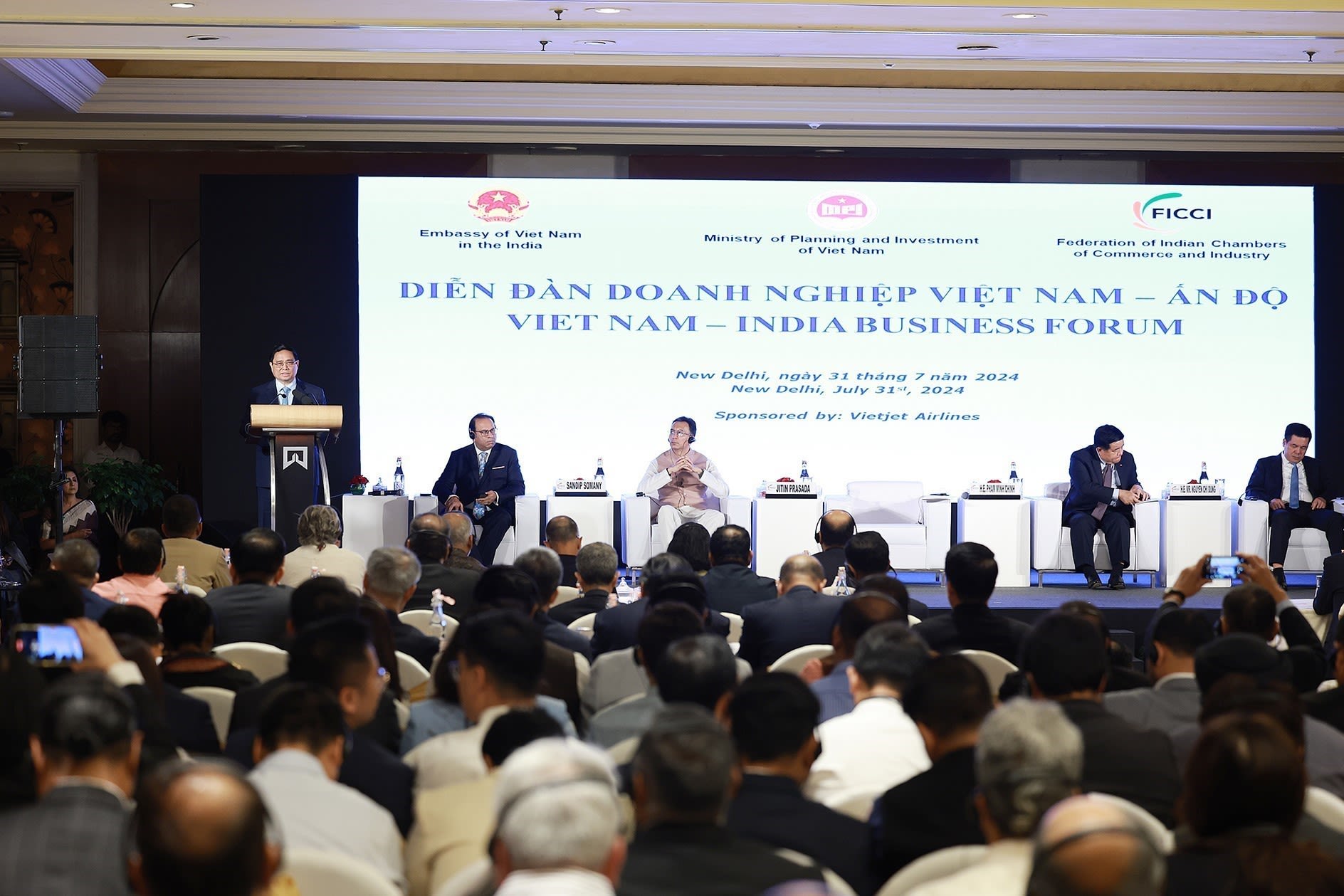
The Viet Nam–India Business Forum takes place in New Delhi on July 31, 2024. (Photo: VNA)
The Viet Nam–India Business Forum takes place in New Delhi on July 31, 2024. (Photo: VNA)
Indian investors have invested in 15 economic sectors of Viet Nam, with capital mainly concentrated in processing industry and manufacturing, electricity production and distribution, and mining. Notable projects include the Son Hoa Sugar Factory project and the Ngon Coffee Co., Ltd. project in Dak Lak Province, and the Infra 1 Solar Power Plant project in Khanh Hoa Province.
Meanwhile, as of March 2026, Vietnamese investors had invested in 30 projects in India with total registered capital of nearly 150.5 million USD, ranking 17th out of 88 overseas investment destinations of Viet Nam.
Education and training cooperation between the two countries has achieved many positive results. India has granted Viet Nam 150 scholarships under the Indian Technical and Economic Cooperation (ITEC) Programme, 30 scholarships under the CEP/GCSS Programme, and two to four scholarships per year for Hindi language and Indian culture studies. It has also supported the establishment of a high-quality human resources training centre in information technology and communications in Ha Noi, and an English language centre at Da Nang University.
Defence and security cooperation continues to be an important and strategic pillar. The Ministries of Defence of both countries are coordinating the implementation of defence credit packages and non-refundable aid provided by the Indian Government to Viet Nam. India has supported Viet Nam in training, transferring used submarines, and defence equipment.


Ceremony welcoming officers and commanders of Indian Navy ships on a friendly visit to Da Nang City, on July 24-27, 2025. (Photo: VNA)
Ceremony welcoming officers and commanders of Indian Navy ships on a friendly visit to Da Nang City, on July 24-27, 2025. (Photo: VNA)
Tourism cooperation and people-to-people exchanges have been strengthened and broadened. Both sides are enhancing air and maritime connectivity. India is supporting Viet Nam in the restoration of the Cham tower groups at the My Son heritage site.
From having no direct flights in 2016, the two countries now operate nearly 100 flights a week, generating strong momentum for trade, investment, tourism and people-to-people exchanges. Exchanges of scholars, students and young people between the two nations are also becoming increasingly dynamic.
In scientific and technological cooperation, the two sides maintain a sub-committee mechanism on science and technology. Collaboration in this field has been advanced, providing fresh impetus in several areas that meet the needs of both countries, particularly innovation, robotics, start-ups, atomic energy and biotechnology.
Numerous cooperation documents have been signed, a Joint Committee on Atomic Energy for peaceful purposes has been established, and both sides are actively expanding cooperation in information technology and rare earths.
The State visit to India by Party General Secretary and President To Lam is a vivid demonstration of our Party and State’s foreign policy in the new era, as set out by the 14th National Party Congress. That policy is independence, self-reliance, self-strengthening, peace, friendship, cooperation and development, multilateralisation and diversification of external relations, and being a responsible member of the international community.
Nguyen Manh Cuong, Vietnamese Deputy Minister of Foreign Affairs


Head of the Party Central Committee’s Commission for External Relations Le Hoai Trung holds talks with General Secretary of the Communist Party of India Doraisamy Raja on August 28, 2024, during the latter’s working visit to Viet Nam. (Photo: VNA)
Head of the Party Central Committee’s Commission for External Relations Le Hoai Trung holds talks with General Secretary of the Communist Party of India Doraisamy Raja on August 28, 2024, during the latter’s working visit to Viet Nam. (Photo: VNA)
The State visit to India by Party General Secretary and President To Lam and the high-ranking Vietnamese delegation will provide an important impetus for bilateral ties, helping to further strengthen the Viet Nam-India relationship.
Published: May 2026
Production Managers: CHU HONG THANG - PHAM TRUONG SON
Content: MINH HANG - NGUYEN HA
Translation: NDO
Design: NHA NAM
Sources of reference: Ministry of Foreign Affairs, Viet Nam News Agency
 Built with Shorthand