
On the occasion of the 75th anniversary of Nhan Dan Newspaper, Editor-in-Chief Le Quoc Minh shared reflections on the comprehensive renewal of the newspaper’s journalistic products during the past term, emphasising that innovation is not about creating superficial differences but about improving content quality, increasing appeal and reinforcing the persuasiveness of the Party newspaper.

Continuing a historical current
Q: When you were transferred from the Viet Nam News Agency to become Editor-in-Chief of Nhan Dan in 2021, at a time when the newspaper marked its 70th anniversary, how did you view that responsibility in the context of journalism entering a period of profound digital transformation?
A: The year 2021 was a very special moment. Nhan Dan had just celebrated its 70 years of formation and development, a journey long enough to build tradition, credibility and resilience. At the same time, however, it was also a period when Vietnamese journalism stood before a new turning point: digital transformation was no longer merely a trend but had become an unavoidable requirement.
When I was transferred from the Viet Nam News Agency to take up the position, I was fully aware that this was not simply a change of job, but a continuation of a historical current. Nhan Dan is not merely a press organisation; it is the organ of the Party, the official voice of the Party, the State and the people. Therefore, any innovation must be grounded in maintaining firm political steadfastness and adherence to the newspaper’s mission and principles.
The greatest challenge at that time was not to do things differently, but to find ways for the Party’s newspaper to maintain its central role in an increasingly fragmented media environment. Social networks, cross-border platforms and content distribution algorithms are reshaping the public’s habits of receiving information, especially among younger audiences. If the mainstream press does not transform in time, the distance between official information and the public will continue to widen.
However, I do not view digital transformation as purely a technological issue. For me, it is a shift in thinking about how content is organised. Technology is only a tool; what ultimately matters is the quality of information, the depth of analysis and the ability to guide public opinion. Therefore, from the very beginning of the term, my orientation was to combine modern technology with the rich and authoritative archive that Nhan Dan has accumulated over seven decades.
I was also aware that being the first person in many decades not to have risen through the ranks within Nhan Dan created a different mindset. It requires openness, listening and respect for the newspaper’s traditions. Innovation does not mean rejecting what already exists; it means expressing those core values in the language of a new era.
Looking back, I believe that the greatest responsibility when I assumed the position in 2021 was not to create superficial changes, but to initiate a systematic process of transformation for Nhan Dan to enter a new decade with a stronger foundation and greater proactiveness in responding to the changes in the global media environment.

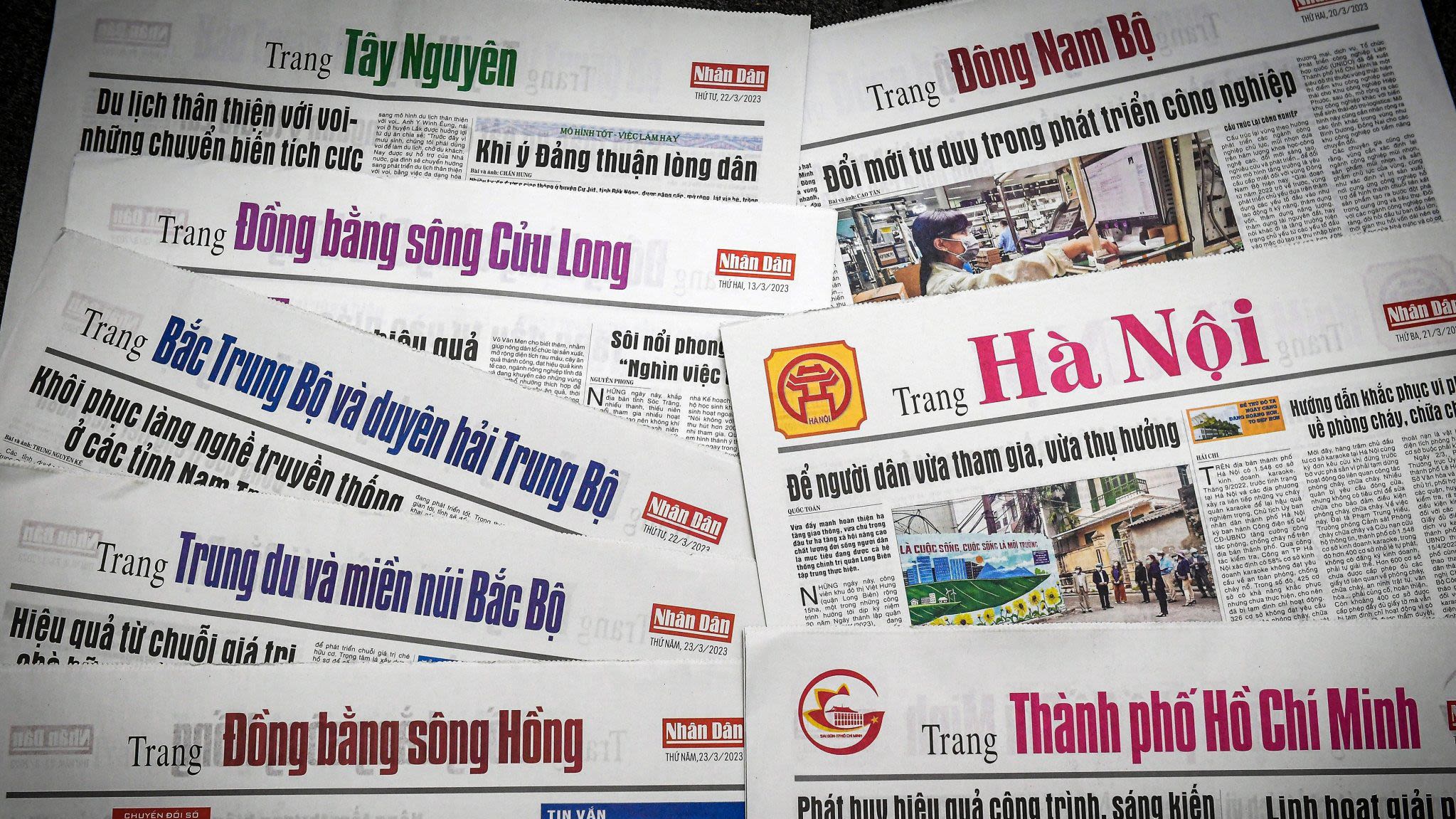
The supplements on six socio-economic regions in the daily print edition were launched by Nhan Dan in March 2023. (Photo: THANH DAT)
The supplements on six socio-economic regions in the daily print edition were launched by Nhan Dan in March 2023. (Photo: THANH DAT)
Q: One of the clear hallmarks of the 2021-2025 term has been Nhan Dan’s comprehensive renewal of its journalistic products, from the print edition (reorganising page 1 and page 8, supplements on six socio-economic regions, special issues), to the electronic edition (e-magazines, long-form articles, infographics, video and data journalism), as well as multi-platform distribution. In your view, what criteria should be used to measure innovation without it becoming merely formalistic?
A: We have always determined that innovation must begin with thinking about content. Without changing the way we think, it is very difficult to change the product.
Nhan Dan is the organ of the Party. Therefore, its content cannot chase popular tastes, and certainly cannot be swept along by emotionally driven information cycles. But that does not mean maintaining the old methods of presentation.
The key question is how to analyse policies and guidelines more clearly and connect them more closely with real life; how to ensure that political commentary is not only correct but also persuasive; and how reporting on a resolution goes beyond simply covering a conference to addressing the practical issues that officials, Party members and the public are concerned about.
During the past term, we have implemented synchronised innovation across both the print and electronic editions. For the daily print edition, page 1 and page 8 have been reorganised to strengthen timeliness, go straight to the core issues, and present shorter but more information-dense articles.
Specialised sections such as those on Ha Noi, Ho Chi Minh City, Ethnic Minorities and Mountainous Areas, and Ethnic Affairs and Religion have also been upgraded in quality, closely reflecting the realities of each respective field.
One notable feature has been the launch of in-depth supplements on the six socio-economic regions. This is a systematic communication model that closely follows the Politburo’s resolutions for each region. Nhan Dan is the only news organisation to conduct such extensive communication structured around regional development. This approach not only serves political tasks but also helps readers gain a clearer understanding of national development strategies within the overall structure of regional connectivity.

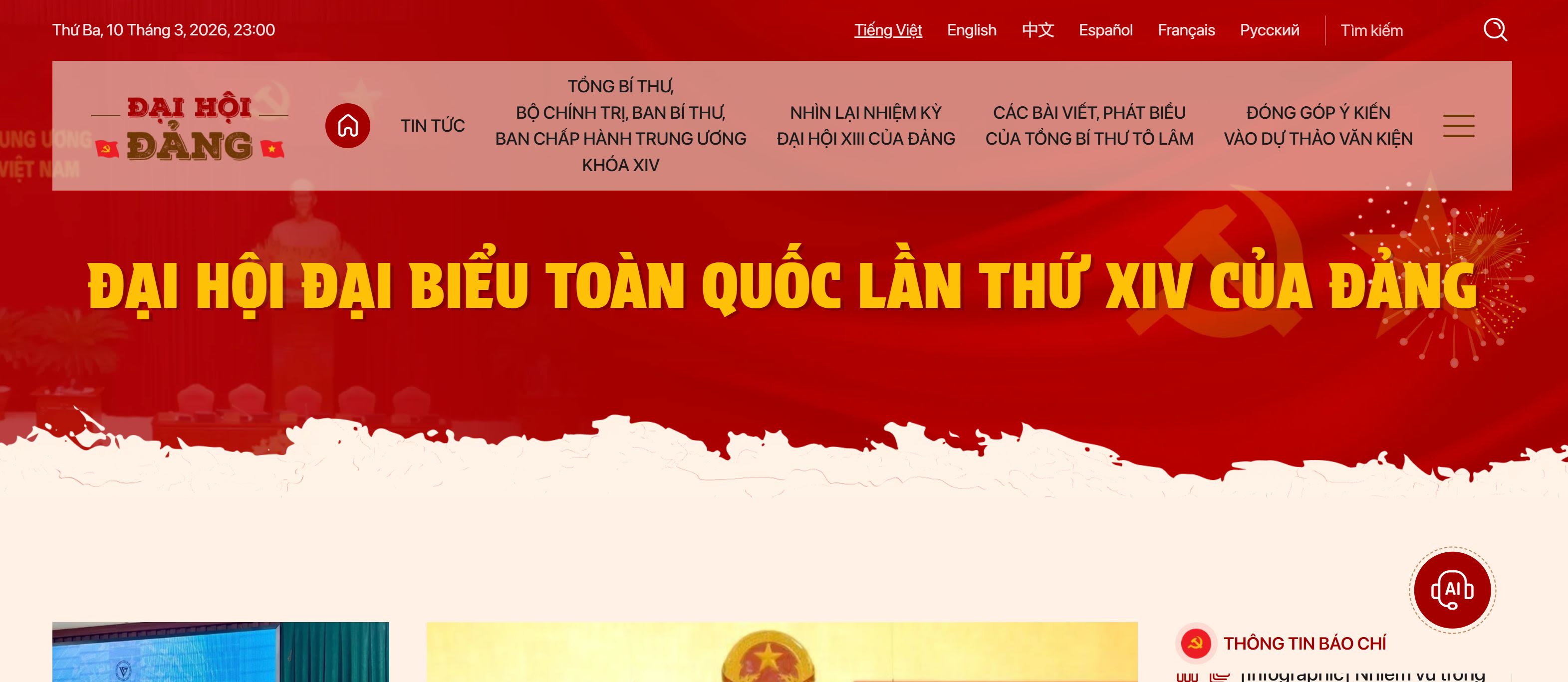
The interface of the 14th National Party Congress special page on Nhan Dan Online.
The interface of the 14th National Party Congress special page on Nhan Dan Online.
For major political events, particularly before, during and after the 14th National Party Congress, we organised in-depth series of articles that combine theoretical analysis with practical review. Many special pages and columns were developed with a strong knowledge-based orientation, bringing together researchers, experts and policymakers to comment on and explain policies in a systematic manner. The newspaper does not merely report events but also explores the core content of Party documents and clarifies the major issues facing the country in the new era.
At the same time, Nhan Dan has continued to play its role as a central hub connecting the network of local Party newspapers. Through coordinated communication efforts, content sharing and unified information orientation, the collective strength of Party newspapers has been extended from the central level to the grassroots. When information is organised with a unified stance while reflecting diverse local realities, the effectiveness of public opinion guidance is significantly enhanced.
With specialised publications such as Nhan Dan Weekend, Nhan Dan Monthly and Thoi Nay, we have placed greater emphasis on thematic depth while strengthening commentary and analysis. Considerable investment has been made in visual design, yet content remains at the centre. Special editions are prepared with great care in both documentation and presentation, not merely to create visual highlights but to present major historical milestones through modern journalistic language with depth and substance.
On digital platforms, Nhan Dan Online has undergone significant innovation with e-magazines, long-form articles, infographics, video and data journalism, integrating multi-platform content from a unified news source. We clearly recognise that simply transferring print articles to digital platforms is not enough. Each platform has its own modes of audience engagement. Yet regardless of the format, the decisive factors remain argumentation and data. Without depth, even the most advanced tools become meaningless.
In my view, innovation should not be measured by the number of formats or communication campaigns. It must be assessed through the quality of content: whether articles are sharper, whether they help readers understand issues more clearly, and whether they contribute more effectively to guiding public opinion. At the same time, it must be reflected in professional recognition and the genuine trust of readers.
For Nhan Dan, innovation is not about creating temporary impressions. It is about ensuring that the voice of the Party newspaper remains clear, steadfast and close to people’s lives in new circumstances. When editorial thinking is elevated, production processes become more scientific and public engagement approaches are adjusted appropriately, innovation will move into deeper levels and become sustainable.

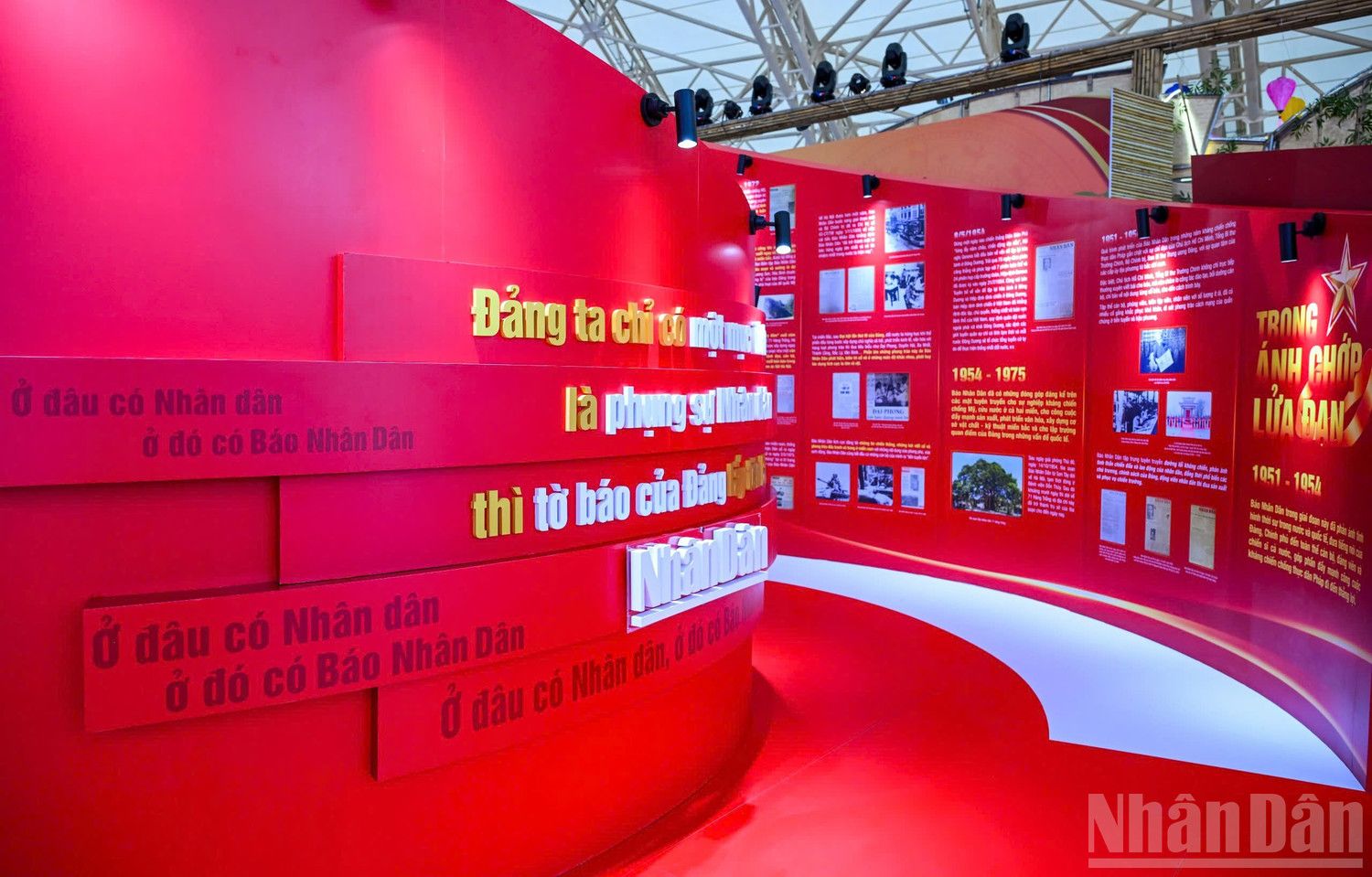
“WHEREVER THERE ARE PEOPLE, THERE IS NHAN DAN NEWSPAPER”
Q: During the past term, the slogan “Wherever there are people, there is Nhan Dan Newspaper” has been widely promoted. Could you elaborate on the journalistic philosophy behind this message?
A: I do not see it as merely a communication slogan. To me, “Wherever there are people, there is Nhan Dan Newspaper” is a concise expression of the newspaper’s core mission in the new context.
From its very name, Nhan Dan has always been closely associated with the people. However, in the digital era, that connection cannot stop at merely reflecting social life in the pages of the newspaper. Today’s audiences access information across many different spaces, from digital platforms and social media to public venues. If Party newspapers do not actively maintain a presence in these spaces, the gap between official information and the public will continue to widen.
Therefore, we have expanded our approach: bringing Nhan Dan into airports, railway stations and event spaces; publishing special supplements for major historical milestones with augmented reality applications; organising political-art programmes such as “The Fatherland in Our Hearts”; and implementing multi-platform communication campaigns marking the 70th anniversary of the Dien Bien Phu Victory, the 50th anniversary of the liberation of the South and national reunification, and the 80th anniversary of the August Revolution and National Day on September 2.
Those activities are not intended merely to “promote the newspaper’s image,” but to ensure that official information reaches the public in a more accessible and engaging way, particularly for younger generations.
I also want to make it clear: do not confuse widespread presence with chasing appearances. If the content lacks sufficient depth, then no matter how grand a communication campaign may be, it will only create a short-term effect. What we focused on most during the past term was still raising content standards and professional standards.


The happiness of readers after completing the cut-and-paste panorama picture titled “The Dien Bien Phu Campaign”, measuring up to 3.21metres in length (a record for a print newspaper product)..
The happiness of readers after completing the cut-and-paste panorama picture titled “The Dien Bien Phu Campaign”, measuring up to 3.21metres in length (a record for a print newspaper product).
The past five years have been a period of flourishing awards for Nhan Dan Newspaper in many fields. Many works by Nhan Dan Newspaper have won the National Press Awards and other important specialist awards. Notably, in 2024, the communication campaign marking the 70th anniversary of the Dien Bien Phu Victory was awarded Gold in the Best Marketing Strategy category by the World Association of News Publishers (WANIFRA); and the panorama project “The Dien Bien Phu Victory” received the Outstanding Product for Young Readers award at the World Printers Summit in Vienna, Austria. Those international recognitions did not come because of eye-catching presentation, but because of the combination of officially historical content, serious research, and creative organisation of presentation. We also organised Innovation Day of Nhan Dan Newspaper and the annual Nhan Dan Newspaper Press Awards to encourage our reporters and editors to raise professional standards. In a fiercely competitive environment, prestige cannot be built with slogans; it must be built with each responsible journalistic work.
Therefore, the philosophy that “wherever the people are, there is Nhan Dan Newspaper” is, in essence, not about expanding places of appearance, but about expanding the depth of service. When content is good enough, sufficiently standardised and organised in a modern language, its spread will be a natural consequence. And that is what we are pursuing.

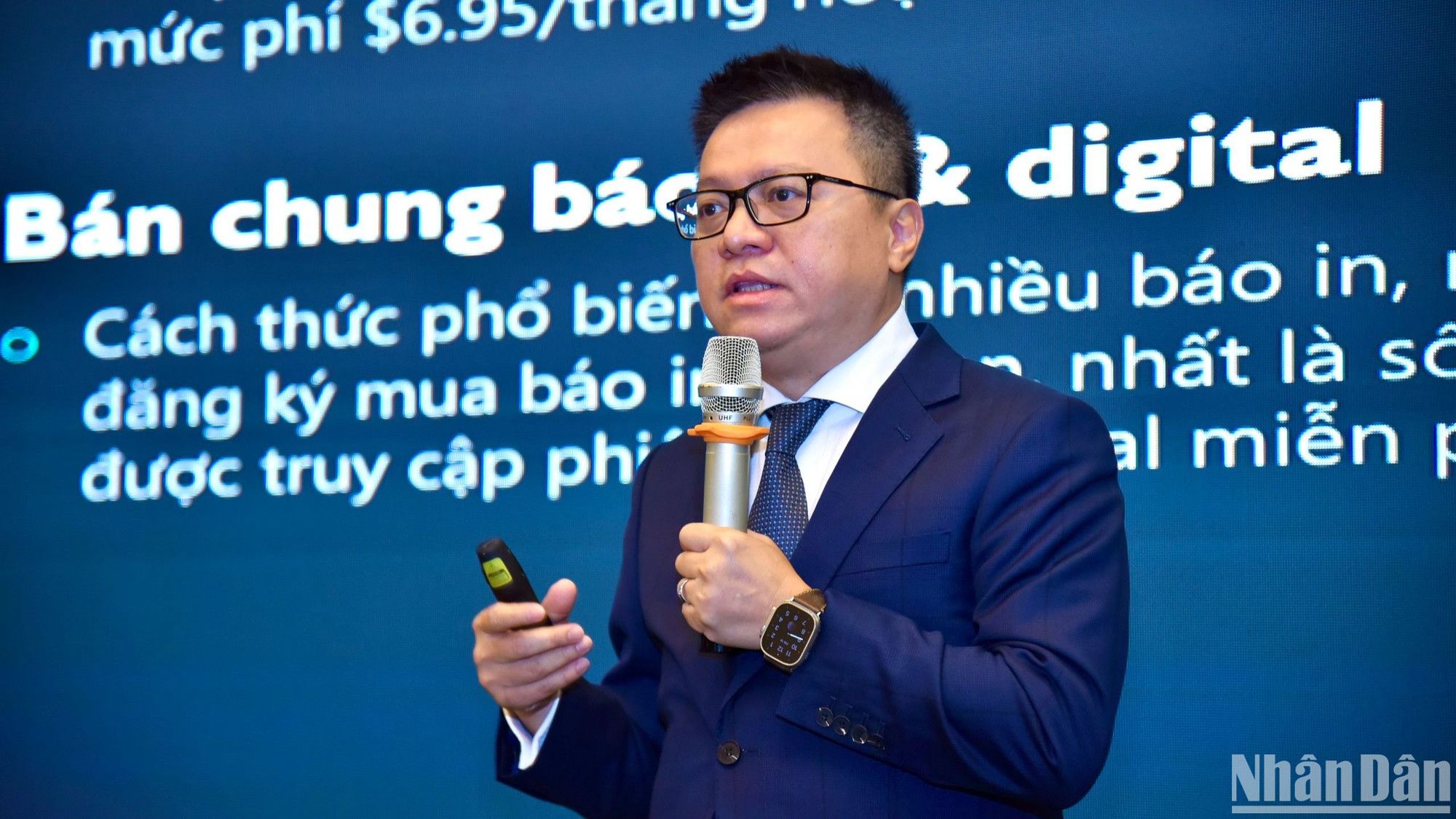


For me, “wherever the people are, there is Nhan Dan Newspaper” is a concise way of expressing the newspaper’s core mission in the new context.
Editor-in-Chief LE QUOC MINH
Q: As mentioned above, you once stressed that innovation is not to impress, but to increase persuasiveness. In actual management, what is the biggest challenge when having to innovate strongly while still maintaining the standards of a Party newspaper?
A: The greatest challenge, in my view, does not lie in technology or resources, but in balance. A Party newspaper differs from market newspapers in that we cannot trade standards for attention. But in the digital media environment, if we fail to attract attention, the political voice may be drowned out. Maintaining the balance between these two seemingly contradictory requirements is the most difficult task.
Speed is important, but accuracy is even more important; widespread dissemination is necessary, but credibility is the long-term asset. In a context in which social media spreads information through emotion and sometimes without verification, Nhan Dan Newspaper must be an anchor of sobriety. That requires a strict editorial process, careful analysis and consistency in standpoint. Another challenge is changing internal thinking. Strong innovation always creates caution, even concern. However, I believe that when the team sees high-quality products, see content being positively received by society and recognised through domestic and international professional awards, they will understand that innovation does not erase identity, but rather clarifies identity in a form that suits current trends.
In other words, innovation is successful when it does not make the voice of the Party newspaper “thinner”, but makes that voice clearer, stronger and closer to life. That is the challenge, but also the responsibility of the leader in this period of vigorous transformation.
At present, Nhan Dan is a leading press agency in digital transformation, ranking among the top 10 central press agencies with outstanding digital transformation for two consecutive years of 2024 and 2025, and rising to third place out of 10 in 2025, with a series of positive changes in its converged editorial office and the application of modern press technologies.

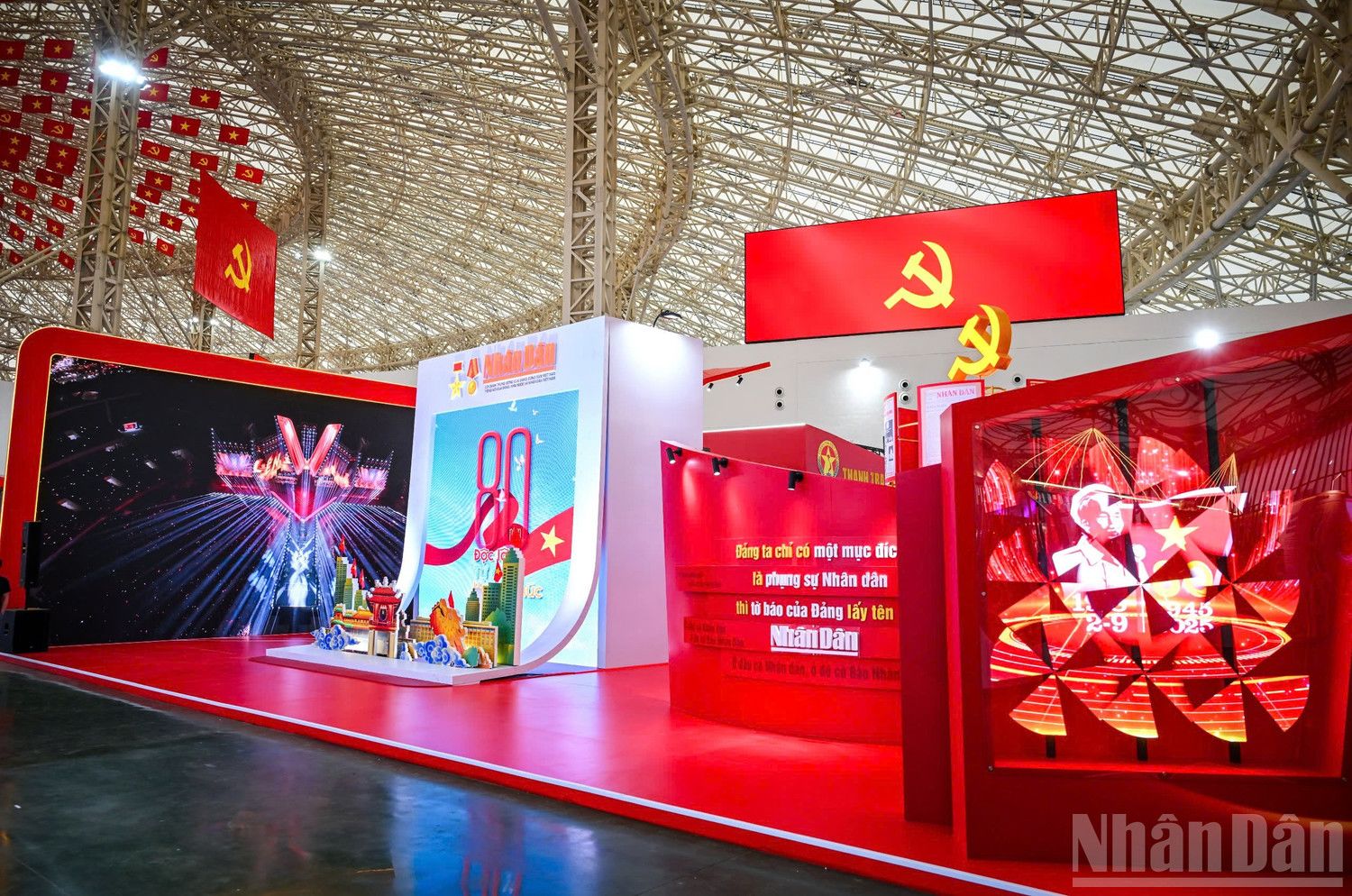
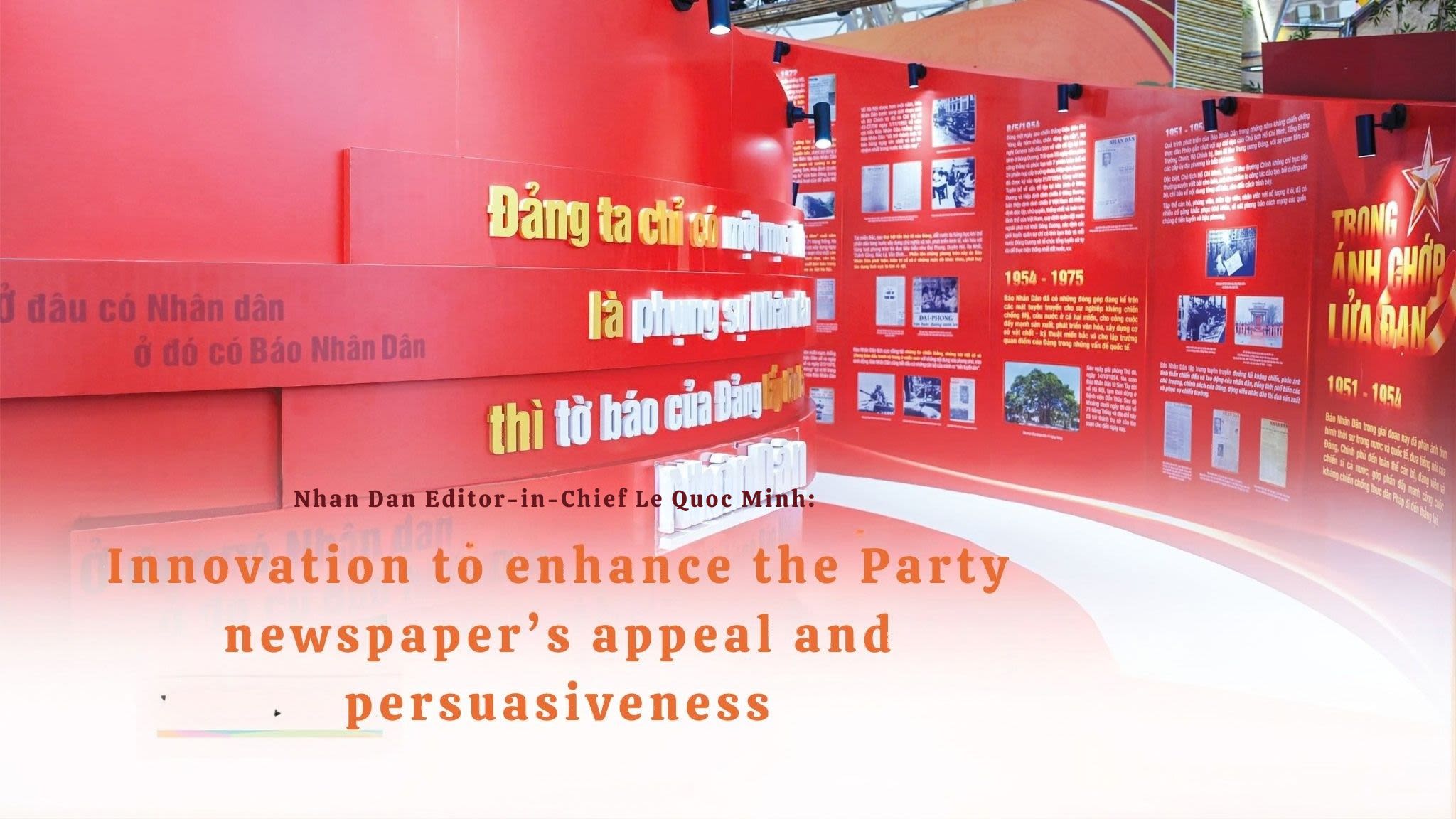
The exhibition “Nhan Dan Newspaper – The Voice of the Party, the State and the People of Viet Nam”, was held within the framework of the National Achievements Exhibition at the Viet Nam Exhibition Fair Centre (Dong Anh, Ha Noi) in August–September 2025.
The exhibition “Nhan Dan Newspaper – The Voice of the Party, the State and the People of Viet Nam”, was held within the framework of the National Achievements Exhibition at the Viet Nam Exhibition Fair Centre (Dong Anh, Ha Noi) in August–September 2025.

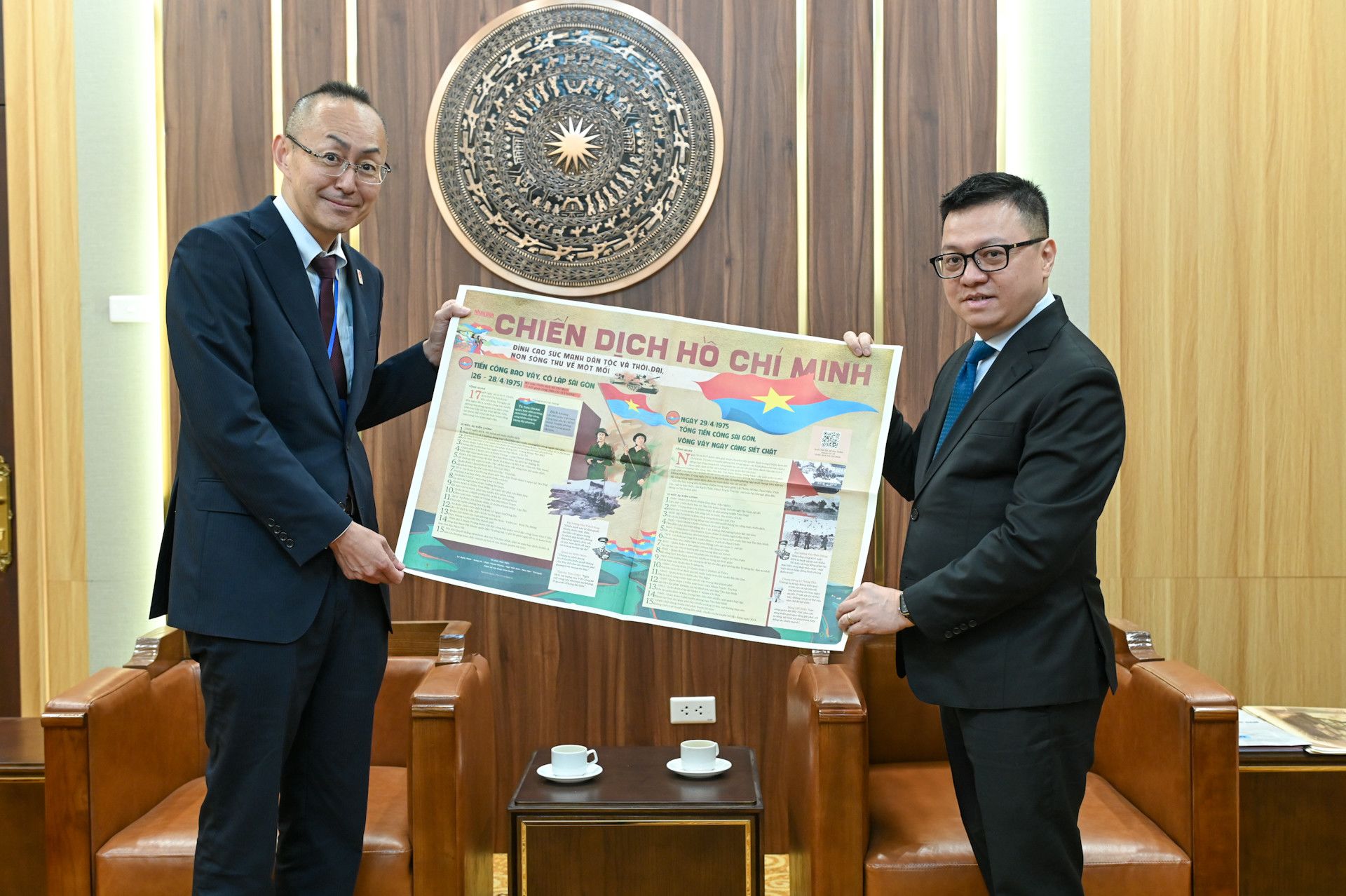
Editor-in-Chief of Nhan Dan Newspaper Le Quoc Minh presents the special supplement published by Nhan Dan to commemorate the 50th anniversary of the Liberation of the South and National Reunification to the delegation of the Japan International Cooperation Agency (JICA).
Editor-in-Chief of Nhan Dan Newspaper Le Quoc Minh presents the special supplement published by Nhan Dan to commemorate the 50th anniversary of the Liberation of the South and National Reunification to the delegation of the Japan International Cooperation Agency (JICA).
ENHANCING THE PRESTIGE AND CENTRAL POSITION OF THE PARTY NEWSPAPER
Q: Your first term took place in an especially challenging context: the early period was marked by the Covid-19 pandemic, with print newspaper declining sharply; the end of the term came with the requirement to streamline the apparatus in line with the Party’s major policy. How did you handle these issues to maintain operational stability while also sustaining momentum for innovation?
A: In reality, looking at the entire 2021–2025 term, it can be said that we almost did not have a single “easy” period. As soon as we began our duties, the Covid-19 pandemic broke out severely, print newspaper distribution chains disrupted, causing advertising revenue to decline sharply and bringing many socio-economic activities to a standstill. Print newspapers, already under pressure to shift toward the digital environment, faced even more difficulties.
In those circumstances, the first thing we determined was not to allow any disruption to our political mission. Nhan Dan Newspaper had to remain the official, accurate, and timely source of information on pandemic prevention and control as well as socio-economic recovery. The editorial office quickly adjusted its working methods, strengthened digital content production, and organised flexible working arrangements while still maintaining strict verification procedures. At that time, digital transformation was no longer a long-term plan but a matter of survival.
At the same time, we gradually restructured operations to improve efficiency. A content management system (CMS) was deployed synchronously; AI and big data applications were used to analyse trends and optimise distribution; and publishing processes were shortened. Thanks to this proactive approach, access to the Nhan Dan Newspaper’s online version grew significantly, creating a new source of momentum at a time when print newspaper was declining.
By the end of the term, the requirement to streamline the organisational apparatus under Resolution No. 18-NQ/TW and related central regulations posed another challenge — an organisational one. Streamlining does not simply mean reducing units but restructuring to ensure more effective and efficient operations. The newspaper completed the review and restructuring of its organisational apparatus; merged functional units; established the Technology Department and the Media Development Centre; and implemented staff reduction plans. By the end of June 2025, 166 employees had voluntarily retired under government decrees. This was not a small number, but the process was carried out with consensus, ensuring proper policies and maintaining stable staff morale.
Streamlining is intended to become stronger, not to narrow the role of the organisation. When functions and responsibilities are clearly defined and technology is applied effectively, the scale may become more compact but capacity is enhanced.
Throughout that process, my consistent emphasis was on “streamlining to become stronger, not to shrink the role.” When the organisation clearly defines functions and responsibilities and effectively applies technology, the scale may become more compact, but the capacity increases. Looking back, I believe that these pressures forced us to be more decisive in innovation and more disciplined in governance. With the attention, orientation and direct, regular guidance of the Party’s senior leaders, and with the unity of the employees of Nhan Dan Newspaper, we have been able to turn crisis into momentum for transformation.
Q: In the context of print newspapers shrinking, socio-economic difficulties after the pandemic, and changes in the financial mechanisms of the press sector, what has Nhan Dan Newspaper done to ensure revenue and improve the livelihood of employees and reporters while still maintaining the principles and purposes of a Party newspaper?
A: This is one of the most difficult challenges of the term. The world and Vietnamese press face the reality of declining advertising revenue on print newspapers while operating costs continue to rise. For a Party newspaper, the pressure is even greater because we cannot commercialise content to generate income.
Our viewpoint is that newspaper economics cannot be separated from content quality. If the content does not have enough value, it is very difficult to create sustainable revenue sources. Therefore, the first step is still to raise product standards, ensuring that each publication genuinely attracts readers and partners.
At the same time, we reorganised the newspaper’s economic model in a more professional direction. The Media Development Centre was established through the consolidation of publication support units to build a systematic newspaper economic strategy instead of handling contracts separately. Political, cultural, and media events are now organised according to a model that combines communication activities with the mobilisation of social resources in a transparent and appropriate manner.
Distribution has also been strengthened in line with the Central Committee’s directives on purchasing and reading Party newspapers, with close coordination between the postal system and localities to maintain stable circulation. Currently, the daily circulation of Nhan Dan Newspaper is maintained at around 100,000 copies per day. Publications such as Nhan Dan Weekend, Nhan Dan Monthly, Thoi Nay, and the Lunar New Year edition have all maintained stable circulation despite the generally difficult circumstances.
We are also making significant investments in digital transformation as a long-term economic solution. As electronic access expands and the multi-platform ecosystem develops, opportunities for media collaboration, policy promotion, and project publicity will grow further, while still ensuring alignment with our editorial direction.
Most importantly, I believe we must uphold transparency and financial discipline. All economic activities must adhere to the principle of never compromising the newspaper’s editorial independence and integrity. Only when the team is confident that journalism economics operates transparently for the common good can consensus be built. Over the past five years, despite challenging conditions, Nhan Dan Newspaper has maintained stability, gradually improved staff livelihoods, and created a foundation for more sustainable development ahead.

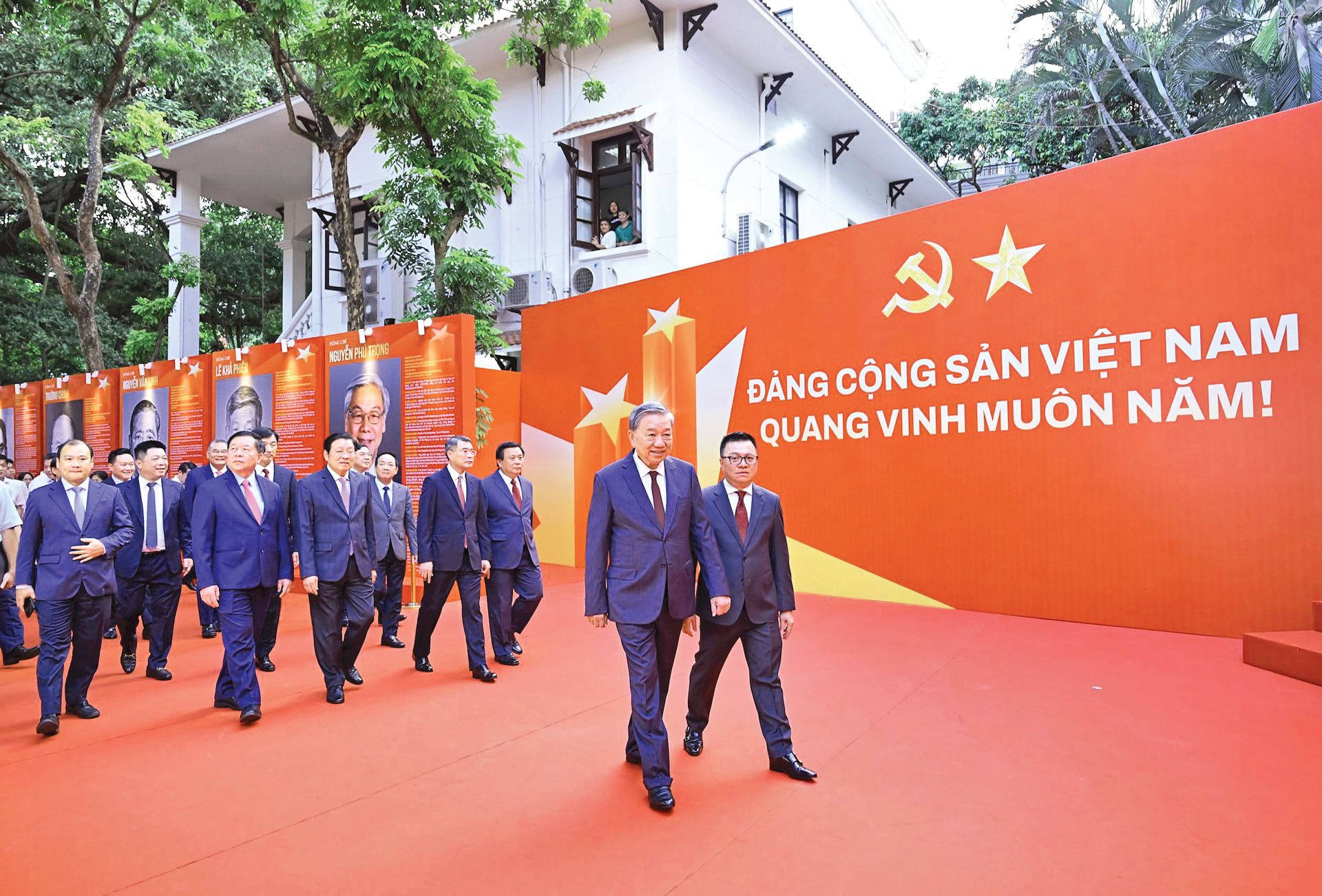
Party General Secretary To Lam attends the launch of the news website on the 14th National Congress of the Communist Party of Viet Nam.
Party General Secretary To Lam attends the launch of the news website on the 14th National Congress of the Communist Party of Viet Nam.
Q: Marking the 75th anniversary of the newspaper’s first issue, how do you view the road ahead? Amid the Party and State’s push to streamline the apparatus and enhance the political system’s effectiveness and efficiency; with rapid AI development and public trust as the decisive factor, what foundations must Nhan Dan prepare to maintain its central role as the Party’s newspaper?
A: The 75-year milestone, to me, is not merely a celebration. It is a moment to reflect on the foundations built by preceding generations and to ask what we must do to honour that legacy in new conditions.
As the political system streamlines for greater effectiveness and efficiency, every agency and position must deliver substantive quality. The press is no exception. For Nhan Dan, this demands clarity: the apparatus may become leaner, but our voice must grow stronger; processes may shorten, but standards must rise higher.
Alongside this, AI and data technologies are profoundly reshaping the media landscape. Fake news, manipulated information, and emotional exploitation can spread rapidly. In this context, Nhan Dan’s core value lies not in speed, but in reliability. If the past 75 years built the paper on political prestige and professional responsibility, the next phase must reinforce that through superior analysis, forecasting, and verification capabilities.
I see three foundations to be strengthened.
First is political resolve and professional standards. This is the irreplaceable “pillar”. Technology may alter presentation, but it cannot replace stance, responsibility, and editorial discipline.
Second is digital capability and a data mindset. We cannot stand apart from technological flows. Applying AI, developing data journalism, and organising multi-platform content are essential. Yet application must be selective, serving political tasks and public interest, never allowing technology to dictate direction.
Third, above all, is human resources. Post-streamlining, every cadre and reporter must work with higher productivity and professionalism. Young teams need bigger responsibilities and more challenges to mature faster. Alongside digital skills, they must receive solid training in theory, history, and the newspaper’s traditions.
Thus, alongside content and technology renewal, we emphasise preserving and systematising our heritage. The recent restoration of Nhan Dan’s two historical sites in Thai Nguyen and Tuyen Quang is not just tribute, but a reminder of our revolutionary origins. Looking ahead to our 80th anniversary, we aim to produce a comprehensive, scientific history of Nhan Dan worthy of its stature—so tradition becomes not just ceremonial recollection, but an ideological and spiritual foundation for future strides.
I believe that at this 75-year milestone, Nhan Dan enters not just a new temporal phase, but a new qualitative demand. Sustaining public trust in today’s complex information environment is the most practical way to continue and deepen the paper’s glorious traditions.
Thank you for sharing your insights!
CONTENT: LA GIANG
TRANSLATION: NDO
PUBLISHED: MARCH 2026
 Built with Shorthand