
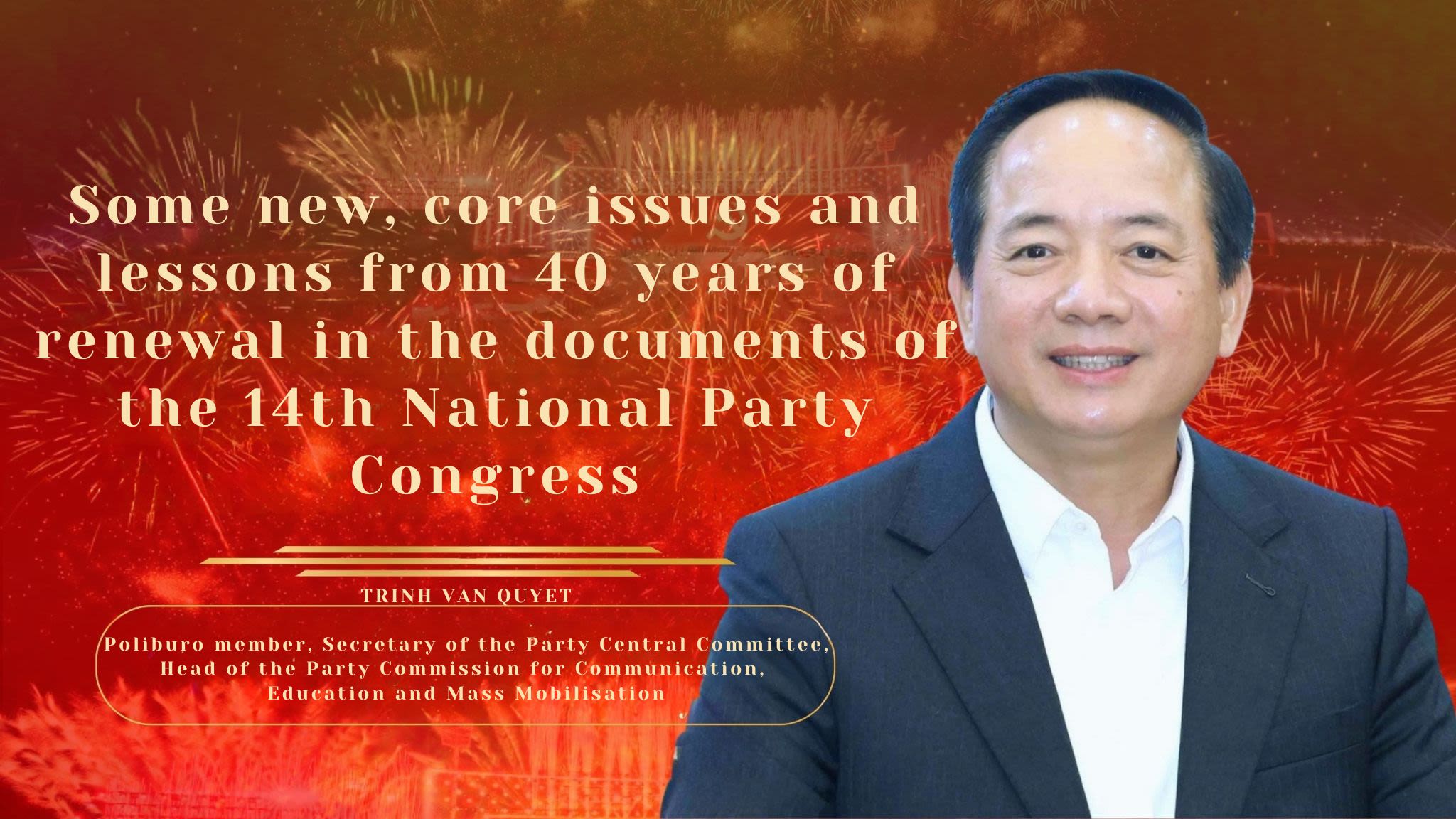

From January 19 to 23, 2026, the 14th National Congress of the Communist Party of Viet Nam was held with great success. The Congress elected a Central Committee comprising carefully selected comrades who possess sufficient competence, integrity and capability to shoulder responsibilities before the Party and the people. The Congress also adopted a resolution that clearly defines the Party’s guidelines, orientations and strategic decisions for the 2026-2031 term, as well as the country’s strategic development orientation until 2045, marking the beginning of a new era of national development towards a peaceful, independent, democratic, strong, prosperous, civilised and happy Viet Nam.
In accordance with the assignment of the conference’s organising committee, I would like to make a presentation entitled “Some new, core issues and lessons from 40 years of renewal in the documents of the 14th National Party Congress”. The presentation consists of four parts:
1) The role, significance and fundamental successes of the 14th Congress;
2) New approaches and innovations in the preparation of the documents of the 14th Congress;
3) Core issues in the documents of the 14th Congress;
4) Several fundamental requirements for the implementation of the resolution of the 14th Congress.
In line with General Secretary To Lam’s guiding spirit, in this presentation I will not repeat specific figures or detailed contents contained in the Congress documents and resolution. Instead, I will focus on analysing and clarifying the scientific and practical foundations, key characteristics, interactions and significance of the new and core issues, with the aim of opening up deeper and more thorough understanding of the new way of thinking, the new contents, requirements and methods put forward by the 14th Congress, and of moving immediately to organise the implementation of the Congress resolution.

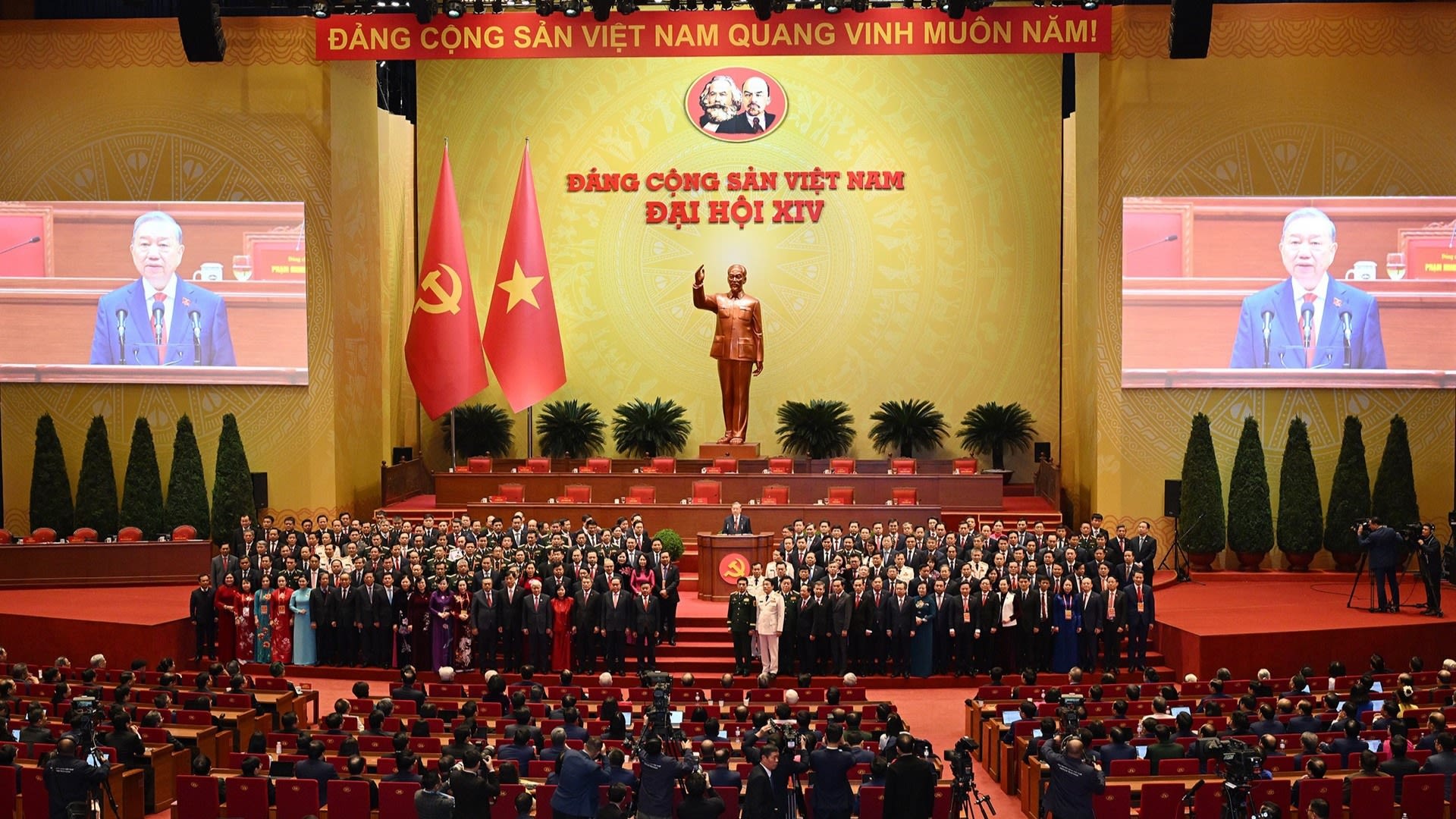
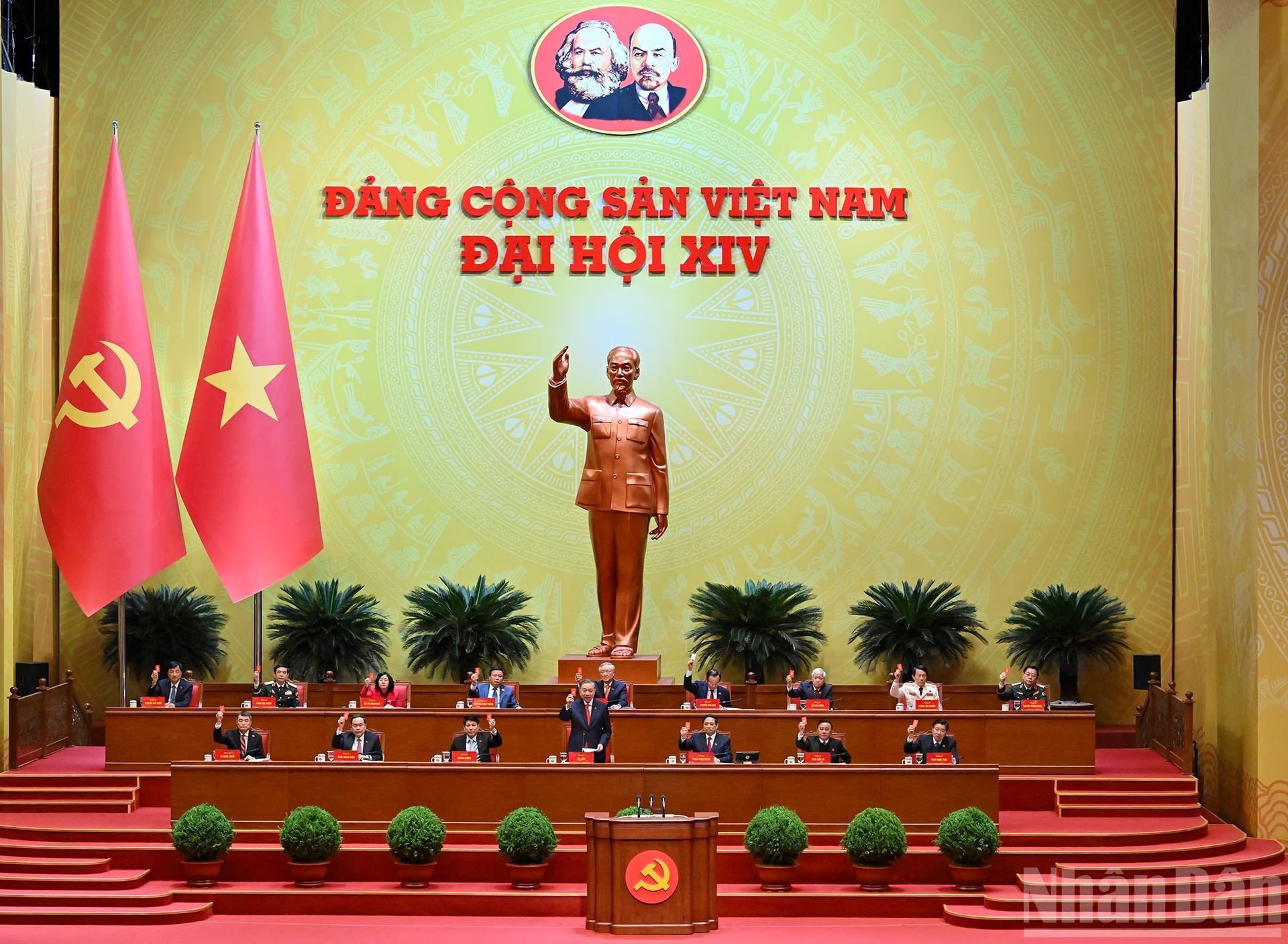
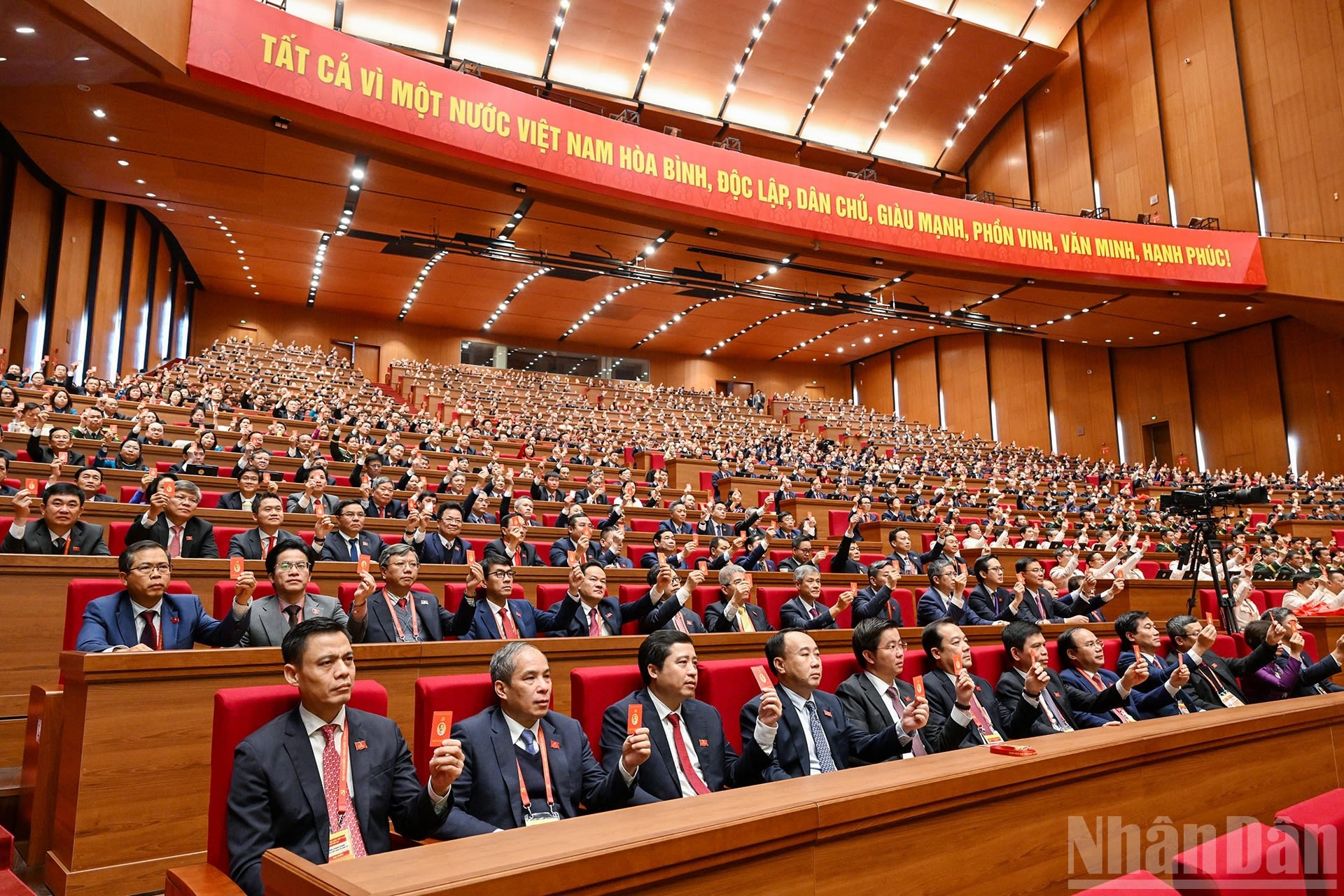
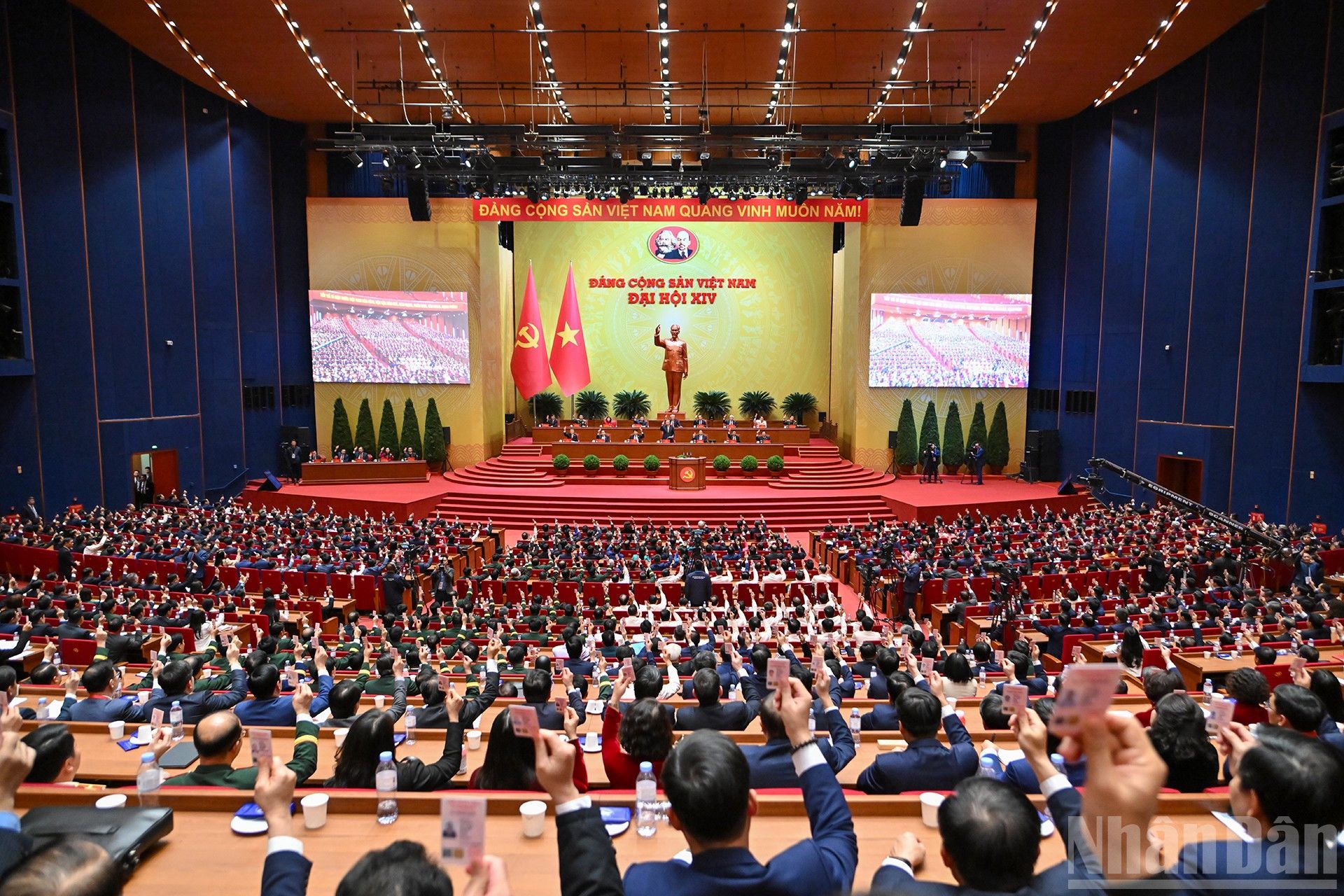
The 14th National Party Congress was held from January 19 to 23, 2026 in Ha Noi.
The 14th National Party Congress was held from January 19 to 23, 2026 in Ha Noi.
I. The role, significance and fundamental successes of the 14th National Party Congress
First of all, it must be stated clearly and consistently that the 14th National Party Congress holds particularly important significance and historical stature for the cause of renewal and national development in the new period.
The 14th National Party Congress holds particularly important significance and historical stature for the cause of renewal and national development in the new period.
This was not merely a congress to review a term or set five-year targets; it was a congress that shaped development thinking, established a new growth model, and laid the institutional foundations for a long-term trajectory of the nation until the middle of the 21st century. The 14th Congress was truly a congress of a developmental turning point, of strategic vision, and of the strong aspiration of the Vietnamese nation to rise in the new era. Several key points can be highlighted:
1. A congress marking a transition to a new stage of development
Looking back over nearly 40 years of renewal, it is clear that the previous period was primarily a process of emerging from crisis, stabilising the macroeconomy, establishing an institutional foundation and accumulating development capacity.
As a result, the country has escaped the group of poor nations, become an economy of growing size, integrated deeply into the global economy, seen marked improvements in people’s living standards, and enhanced its international position and prestige.
However, once development reaches a certain level, the old growth model gradually reveals its limitations, such as heavy reliance on capital, natural resources and cheap labour; low labour productivity; science, technology and innovation not yet truly serving as the main driving forces; and institutional bottlenecks.
It is precisely in this context that the 14th Congress marks the transition to a stage of “developmental breakthrough”. Here, “breakthrough” does not merely mean faster quantitative growth, but a fundamental transformation in the quality of development, reflected in requirements to renew the development model, change growth drivers, enhance national governance capacity, and create new momentum and strength for the country.
This is a shift from extensive to intensive development; from reliance on resources and cheap labour to reliance on knowledge, science, technology, innovation and digital transformation; from “catching up” to “rising to compete”; and from “stability for development” to a dialectical mindset of “development for stability, and stability for sustainable development and improved living standards”.
It can be said that the 14th Congress opens up a new level of national development, one based on endogenous drivers and the creative capacity of the nation.
2. A congress of long-term strategic vision
One of the most notable features of the 14th Congress is its long-term strategic vision, extending beyond the framework of a single term.
The Congress clearly set out strategic goals: by 2030, to become a developing country with modern industry and upper-middle income; and by 2045, to become a developed, high-income country with a socialist orientation. These goals are not merely economic targets, but the crystallisation of national development aspirations and a political commitment of the Party to the people and to history.
More importantly, to realise these goals, the Congress did not stop at aspirations or slogans, but simultaneously designed a comprehensive set of solutions: continuing to improve development institutions; making breakthroughs in science and technology; developing the private sector; upgrading education and human resources; unleashing the strength of culture and people; and expanding external space and strategic autonomy.
It is precisely this close linkage between vision, goals, solutions and implementation that creates strategic depth and feasibility for the development path.

3. Outstanding successes of the Congress
The fundamental successes of the 14th National Party Congress can be summarised across three dimensions:
First, success in theoretical thinking and awareness
The Congress demonstrated a clear scientific and practical spirit, courageously “looking straight at the truth”, objectively assessing both achievements and shortcomings, and clearly identifying “development bottlenecks” in institutions, resources, governance and the quality of growth
On that basis, the Congress supplemented and developed many new theoretical understandings: strategic autonomy; development institutions; science and technology as the primary driving force; the private economy as the most important driving force; culture and people as endogenous strength… This is a vivid manifestation of the ruling Party’s capacity for self-renewal and its ability to draw lessons from practice, crystallising the experience gained over the past 40 years of Doi Moi.
Second, success in strategic orientation and policy design
For the first time, a system of development viewpoints was built based on systemic thinking, with multiple pillars and multiple drivers, closely linking the economy with culture, society, the environment, national defence, security, and foreign affairs.
In particular, the integration of three major reports into a single unified Political Report was a highly significant success both in terms of methodology and leadership approach. This integration carries profound meanings: overcoming overlap, fragmentation, and the situation in which “each document speaks for itself”; ensuring unity between political lines, socio-economic strategy, and Party building; and creating a coherent and consistent whole of thinking from beginning to end.
More importantly, in terms of practical organisation: cadres and Party members can more easily access, study, and thoroughly grasp the contents; different interpretations among reports are avoided; the risk of fragmented and parochial implementation is reduced; and unity of will and action throughout the entire political system is strengthened.
It can be said that integrating the documents is, in essence, integrating thinking, integrating awareness, and integrating action, thereby enhancing the Party’s leadership and governance capacity under new conditions. This is not merely a technical innovation in drafting, but an innovation in the method of leadership through documents - shifting from “orientation” to “action,” from “saying the right things” to “being able to do them.”
Third, success in inspiring confidence and the national aspiration for development
If documents stop at policies without generating social confidence, they can hardly become a driving force for development. The 14th National Party Congress achieved something more important: it strongly inspired the spirit of confidence, self-reliance, resilience, and the will to rise of the entire nation; connected the Party’s aspirations with the people’s expectations; and transformed development goals into a common call to action. This is precisely the greatest spiritual strength and endogenous resource, forming the foundation for turning all Party guidelines and State policies into reality.
From the analysis of the above factors, it can be seen that the 14th Congress was not merely an ordinary political event, but a historic milestone opening a new era of development for the country and the nation - an era of breakthrough, creativity, and self-reliance. For a Viet Nam that is peaceful, independent, democratic, strong, prosperous, civilised, and happy.
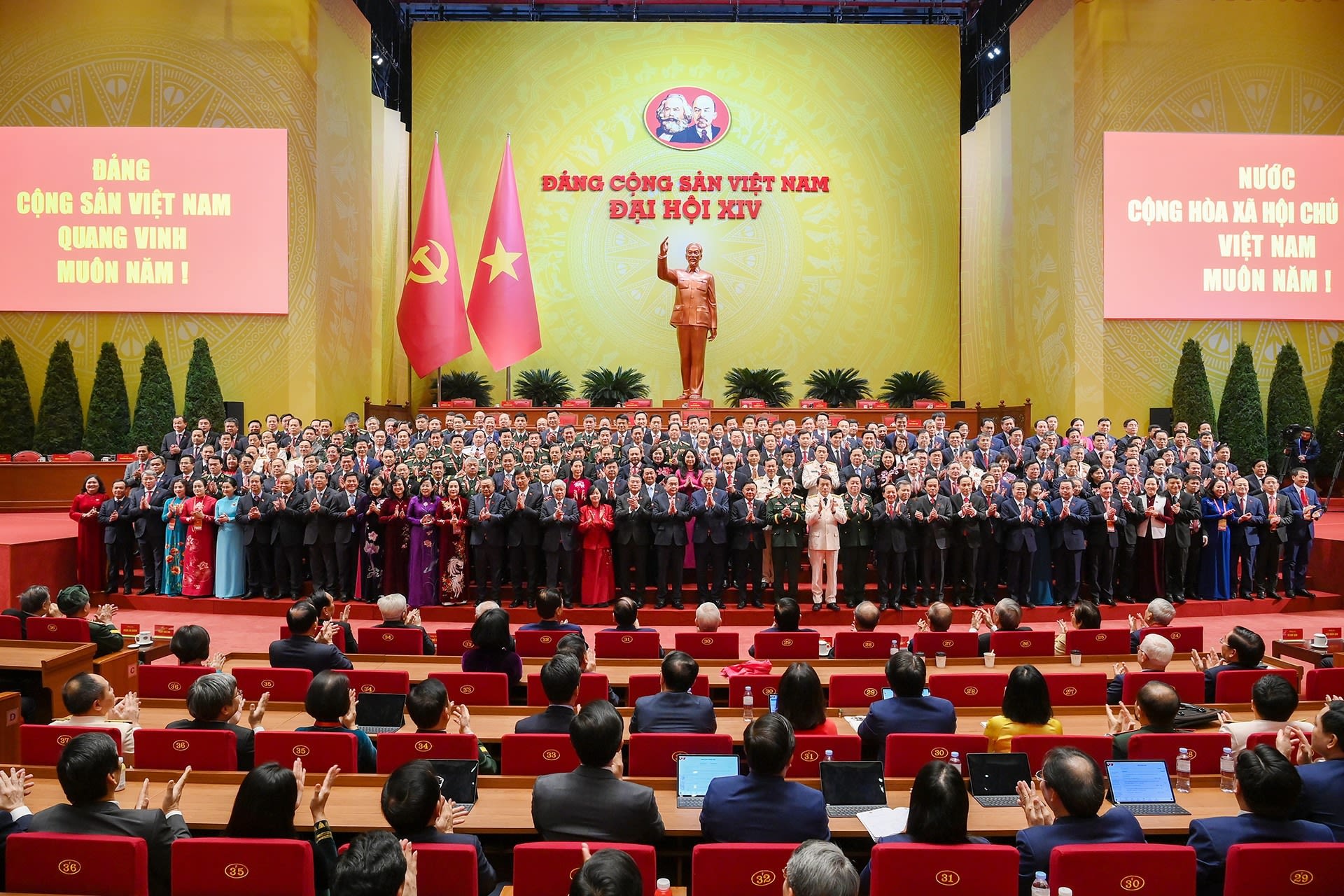
The 14th-term Party Central Committee made its debut at the Congress.
The 14th-term Party Central Committee made its debut at the Congress.
II. New approaches and innovations in the preparation of the documents of the 14th Congress
The 14th Congress demonstrates renewal and creativity in the Party’s mode of thinking and its method of leadership and governance, reflected right from the way the documents were drafted. In the context of a ruling Party, Congress documents are not merely political materials, but a “strategic blueprint” and the Party’s highest instrument of leadership over the entire society. Innovating the documents is, in essence, innovating the Party’s method of leadership and governance. This can be understood through several issues as follows:



1. Innovation in approach: from term review to strategic development design
In previous periods, Congress documents often focused on reviewing achievements, drawing lessons, and setting out objectives and tasks. The 14th Congress went beyond that approach, shifting strongly toward long-term strategic development design.
This is reflected in the following aspects: along with a five-year vision, orientation toward plans to 2030 and a vision to 2045; not only setting goals but simultaneously establishing a development model, development drivers, and development institutions; not only identifying tasks but closely linking them with action programmes and implementation arrangements.
Thus, the document is no longer a “comprehensive report” but becomes a “strategic roadmap” guiding the entire political system in its operation over a long period.
2. Systemic and comprehensive thinking: integrating fields into a unified whole
A breakthrough of profound methodological significance was the integration of three major reports into a single unified Political Report. This innovation reflects a new awareness: under modern development conditions, politics cannot be separated from the economy; the economy cannot be separated from culture and society; and the cause of national construction and development cannot be separated from Party building and the political system.
It overcomes the previous situation in which reports were presented separately, easily leading to overlap in content, dispersed focus, and even differing expressions that caused inconsistent interpretations. By integrating them into one single Political Report, a seamless, consistent, and coherent whole of thinking has been created, from policy line to organisation of implementation.
The practical significance is clear: cadres and Party members can more easily study and grasp the key points; differing interpretations among documents are avoided; parochial application according to “one’s own sector” is limited; and unity of awareness and action throughout the Party is strengthened.
It can be said that integrating the documents is integrating thinking, integrating awareness, and integrating action. This is an expression of a new leadership style, more scientific, modern, and professional, of the ruling Party.
3. Shifting from “orientation resolutions” to “action resolutions”
For the first time, even before and during the preparation process for the Congress, the Party put forward a series of strategic decisions in important fields of great significance to the country, such as: perfecting the legal system; international integration in the new context; development of science and technology, education and training; development of the private economy; development of culture; healthcare and protection of people’s health. This represents a new approach to the Party’s leadership method, imbued with a spirit of determination and urgency, concretising the Party’s guidelines and policies simultaneously with the process of formulating those very guidelines.
Recently, our Party adopted nine strategic resolutions, implemented ahead of the 14th National Party Congress.
This reflects a new approach, new thinking and, above all, action-oriented thinking, with early preparation to ensure effective implementation of the resolutions.
For the first time, the Action Programme to implement the Resolution has been directly incorporated into the Political Report for the Congress. This embodies a new spirit: words must be matched with deeds; objectives must be linked to solutions; solutions must be tied to responsibilities; responsibilities must be connected to deadlines and resources. In doing so, it addresses long-standing shortcomings where resolutions were sound but implementation was slow, and policies were clear but their specification delayed. This marks an important shift: from a mindset of “policy thinking” to one of “execution management”.
In the Report on the documents submitted to the 14th National Party Congress, Party General Secretary To Lam emphasised: “The Congress documents stress the need for action; they heighten the responsibility of each level, each sector, each cadre; thoroughly overcoming the situation of ‘talking much but doing little’, ‘talking well but doing poorly’, ‘preaching but not practising’, lack of inspection and supervision; setting high objectives but implementing slowly with low effectiveness.”
Therefore, it can be affirmed that innovating the drafting of the Congress documents is not merely a change in presentation, but a concrete manifestation of the Party’s innovation in its leadership methods under new conditions—ensuring greater practicality, more action, and higher effectiveness. Understanding this new approach and the innovations in drafting provides the first and most important methodological basis for comprehending fully the content of the documents, and for accurately identifying the requirements, methods and ways to organise the successful implementation of the line and policies set out by the 14th National Party Congress.
III. Core issues in the documents of the 14th Congress
If we regard the 14th National Party Congress as a milestone opening a new era of national development, then the Congress documents represent the highest expression of the Party’s wisdom, resolve and strategic vision. They reflect a new step in the development of theoretical understanding and practical guidance.
The highlight of the Congress documents lies not only in the specific objectives, but more profoundly in the fundamental shifts in development thinking, growth models and methods of organising the country in the new era.
The core issues can be summarised into the following strategic pillars:
1. Supplementing and developing the “Theory on the Doi Moi (Renewal) Guideline” – A new maturity in the Party’s theoretical thinking
It must be affirmed that one of the historically significant new features of the 14th National Party Congress is the supplementation of the “theory on the Doi Moi (Renewal) guideline” as a component of the Party’s ideological foundation. This embodies a profound truth: our Party is not dogmatic, not formulaic, but always summarises practice to develop theory, and uses theory to guide practice. These are precisely the valuable lessons from 40 years of Doi Moi that we have recently reviewed.
The cause of national construction and development during over 40 years of implementing the Party’s Doi Moi guideline has not only brought historically great achievements—creating an unprecedented foundation, potential and international position for the country—but also provides compelling proof of the Party’s resolve and creativity, and the great confidence and strength of the people.
The 40 years of Doi Moi have also furnished an immensely rich treasure trove of experience: successfully transforming from a centrally planned economy to a socialist-oriented market economy; integrating economic growth with social progress and equity; pursuing deep and wide international integration while steadfastly maintaining independence and self-reliance; placing people at the centre of every development strategy, with people as both the goal and driving force of development, and the happiness of the people as the supreme purpose of the Party and the regime; promoting the people’s mastery role from policy formation, Party building and political system construction to organisation of implementation, inspection, supervision and enjoyment of development outcomes.
These achievements carry not only practical value, but have been elevated to systematic theoretical understanding, affirming that Viet Nam’s path to socialism is suited to the laws of development and the nation’s specific historical conditions.
Thus, supplementing the “theory on Doi Moi guideline” aims to consolidate the Party’s ideological foundation, strengthen confidence in the chosen path, and create a solid theoretical basis for policy building in the new phase. This is a vivid manifestation of the intellectual resolve and self-renewal capacity of a revolutionary ruling party. The theory on Doi Moi guideline, alongside Marxism-Leninism and Ho Chi Minh Thought, will serve as a beacon illuminating the nation’s path to socialism in the new development era.

2. Establishing the mindset of “Strategic Self-Reliance” – Viet Nam’s new positioning in a world of turbulence
In the context of a world increasingly fragmented, with fierce strategic competition, interdependence but also full of risks, the 14th National Party Congress documents for the first time emphasise a concept of profound significance: “strategic self-reliance”.
If “independence and self-reliance” previously stressed non-dependence, then “strategic self-reliance” is understood at a higher level: proactively choosing the development path; proactively shaping foreign relations; proactively mastering technology and resources; proactively responding to external shocks. This marks a shift from a posture of “adaptation” to one of “creation”.
Strategic self-reliance does not mean closing off, but rather proactive opening, deep and wide integration, without compromising national and ethnic interests. This mindset has created broader development space for the country in the new era of globalisation.

3. Completing development institutions — A decisive strategic breakthrough
A very clear recognition in the documents, repeatedly emphasised by General Secretary To Lam, is that institutions are both the “bottleneck of bottlenecks” and the “leverage of leverage”. The fact shows that the country’s resources are not in shortage, however they are often not fully mobilised due to institutional barriers, procedures, and implementation mechanisms. Therefore, the 14th National Party Congress identifies that the building and comprehensive improvement of development institutions are a key task of long-term strategic significance.
The new aspect lies in approaching “development institutions” as an overall ecosystem: laws, policy mechanisms, apparatus, human resources, governance culture, and enforcement discipline.
A transparent, rule-of-law-based, effective, and efficient institution will ensure the unlocking of resources, stimulation of creativity, reduction of social costs, and increasing of market and public confidence. It can be said that a sound institution provides the most solid foundation for sustainable development.

4. Establishing a new growth model based on science, technology, innovation, and digital transformation
This is a fundamental shift in development driving forces. Previously, growth was mainly dependent on capital, natural resources, and low-cost labour. These drivers are now gradually reaching their limits. Accordingly, the 14th National Party Congress clearly defines science and technology, innovation, and digital transformation must become the primary driving forces of growth. This fully aligns with the laws of development of the era — a nation that masters knowledge and technology will master its future.
Rather than considering this as a sector, the congress places science and technology as the pillar of the development model, closely linking them with education and training, production and business activities, and national governance. This is the key for Viet Nam to make breakthroughs and narrow the development gap with advanced countries.

5. Promoting the nation’s endogenous strength: culture, people, education, training, and private economy
A particularly profound point in the documents is the comprehensive development mindset that places people at the centre. The congress affirms that culture is the spiritual foundation, people are the creative subjects, education is the top national policy, and the private economy is one of the most important driving forces.
This demonstrates that development is not only about GDP growth, but about improving quality of life, happiness and human dignity. This is the humanistic essence of the socialist orientation. As President Ho Chi Minh once stated: “The policy of the Party and the government is to take the utmost care of the people’s lives. If the people are hungry, the Party and the government are at fault; if the people are cold, the Party and the government are at fault; if the people are ignorant, the Party and the government are at fault; if the people are ill, the Party and the government are at fault,” and “if the country is independent but the people do not enjoy happiness and freedom, then independence has no meaning.”
When the spiritual resources and creative strength of millions of people are awakened, they become the most powerful and sustainable endogenous driving force of the nation, proving that “With the people's strength, even the greatest and most difficult tasks can be accomplished.”

6. Strengthening national defence and security, and developing foreign affairs in line with the country’s stature
The documents also reflect a higher-level approach to national defence, security, and foreign affairs: not only “firmly and persistently” safeguarding sovereignty, territorial integrity, the Fatherland, the Party, the people, and the regime, but also protecting peace and national sustainability from early and afar, before the country is in danger; not only "integrating for development," but also "contributing to building peace, stability, and common development" in the region and the world. This demonstrates Viet Nam's responsibility to the international community.
Strengthening national defence and security in the current complex global context is a prerequisite for national construction and development, for protecting the highest national and ethnic interests, and for promoting self-reliance, resilience, and deep, broad, and effective international integration. Foreign affairs have become a tool to safeguard national interests and a means of expanding development space, while also affirming Viet Nam’s identity and soft power on the international stage. This is a harmonious combination of national interests and global responsibility.

It can be seen that the documents of the 14th National Party Congress established a new system of development thinking: solid in theory, clear in strategy, strong in driving force, profound in humanism, and modern in governance. This system of viewpoints forms the ideological foundation and guiding principle for action of the entire Party, the entire people, and the entire armed forces in the new era of development.
IV. Several fundamental requirements for the implementation of the resolution of the 14th Congress
NIf the documents of the 14th National Party Congress are considered as a strategic blueprint for the country’s development in the future, then implementation is the bridge from vision to reality. Experience from many terms has shown a profound lesson: a resolution may be very sound and well-crafted, but without determined and synchronised implementation, it remains only on paper.
Therefore, the pressing requirement today is not only to “correctly understand the resolution”, but to transform it into concrete actions, into substantive changes in economic and social life, and into confidence of the entire people and armed forces in the Party, the regime, and the country’s development future.
To transform the resolution into concrete actions, into substantive changes in economic and social life, and into confidence of the entire people and armed forces in the Party, the regime, and the country’s development future.
Several fundamental requirements and solutions can be summarised as follows:
1. High unity in awareness, creating social consensus, and inspiring the aspirations for development
First and foremost, it must begin with awareness. Because all actions come from awareness; without unified awareness, actions will be fragmented. Therefore, studying and thoroughly grasping the resolution cannot be carried out formally or perfunctorily but must clarify the core spirit, the new points, and the responsibilities of each level, sector, and cadre.
There must be a strong shift from the learning method of “reading – copying – listening to reports” towards issue-based discussions, linking with the practical conditions of each locality, unit, and organisation in order to determine specific tasks, roadmaps, implementation solutions, and concrete targets.
More importantly, the Resolution must not only reach officials’ minds, but also touch the people’s hearts — meaning it must help the people understand, build consensus, share the same convictions, and unite in implementing it. Ultimately, the greatest driver of development is social trust, the will for self-reliance and self-strengthening, and the aspiration to rise of every Vietnamese person. When the people have confidence and consensus, there is no difficulty that cannot be overcome.
The Resolution must not only reach officials’ minds, but also touch the people’s hearts — meaning it must help the people understand, build consensus, share the same convictions, and unite in implementing it.
2. Rapid, comprehensive and coherent institutionalisation: the breakthrough link in implementation
A persistent “bottleneck of bottlenecks” is that the right policies are slow to be institutionalised. Slow legislation and delayed issuance of mechanisms and policies inevitably hold back the mobilisation of resources and the capture of development opportunities. Hence the pressing requirement: to urgently review the legal system, revise overlapping and inconsistent provisions, eliminate unnecessary sub-licences, and remove procedural obstacles.
In particular, priority must be given to institutionalising strategic breakthroughs: the socialist-oriented market economy institutions; policies for science and technology development, innovation, and education and training; mechanisms to promote development of the private sector and the state sector; decentralisation and devolution tied to power control; and smooth operation of the two-tier local government system, especially at the commune, ward, and special administrative unit levels. The immediate priority is to swiftly draft, finalise and promulgate the necessary documents, and to strengthen the legal framework so that the Party’s strategic decisions can be translated into practice and deliver results as early as possible.
The more transparent the institutions, the more open the legal corridor, and the simpler and more convenient administrative procedures are, the more social resources are unlocked and the more strongly development momentum is unleashed. It can be said that good institutions are the “greatest lever” for successfully realising the 14th National Party Congress’s development aspirations. Therefore, implementation of the Resolution depends first, and to a large extent, on rapid, comprehensive and coherent institutionalisation of the Party’s strategic decisions.


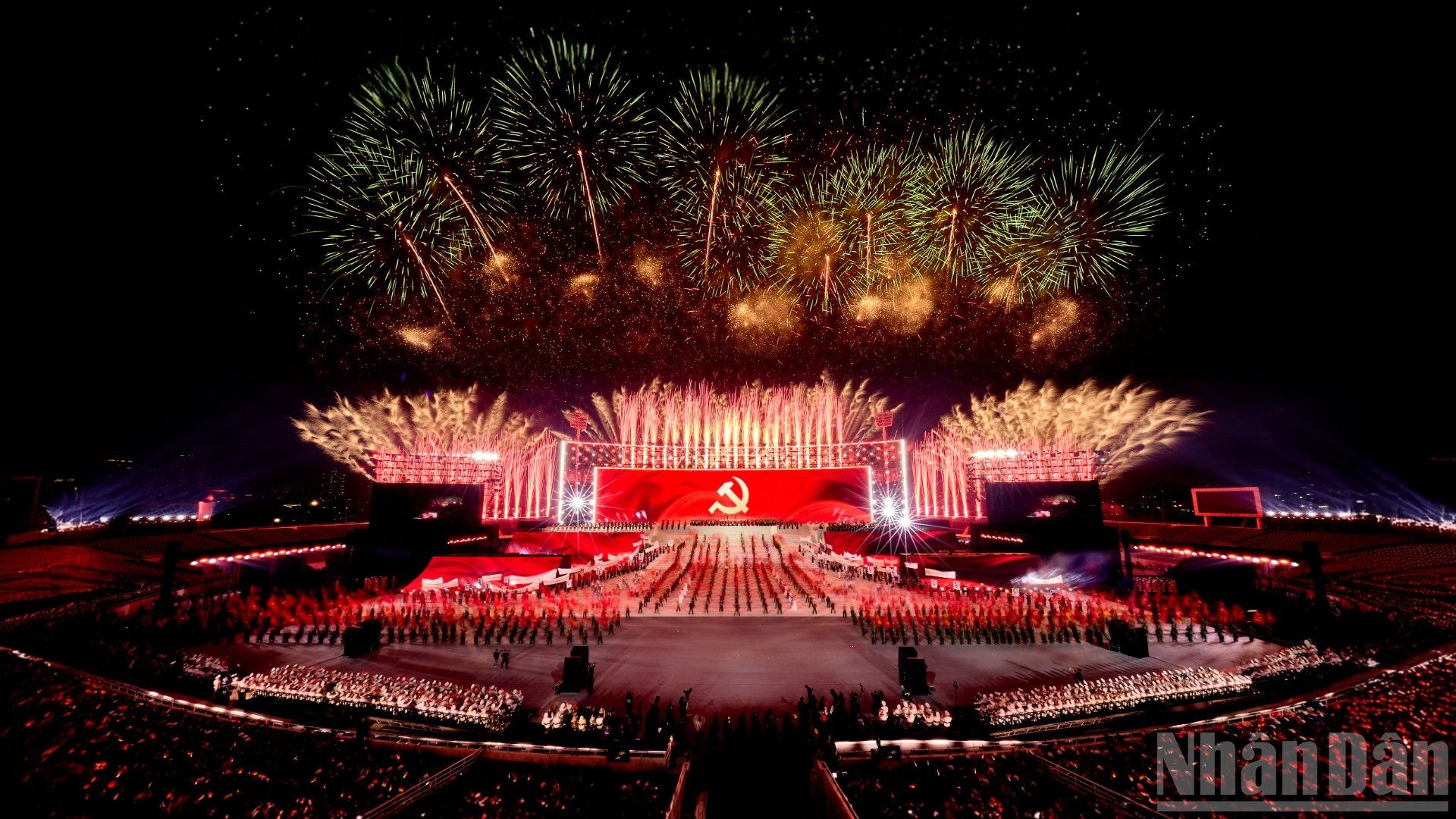
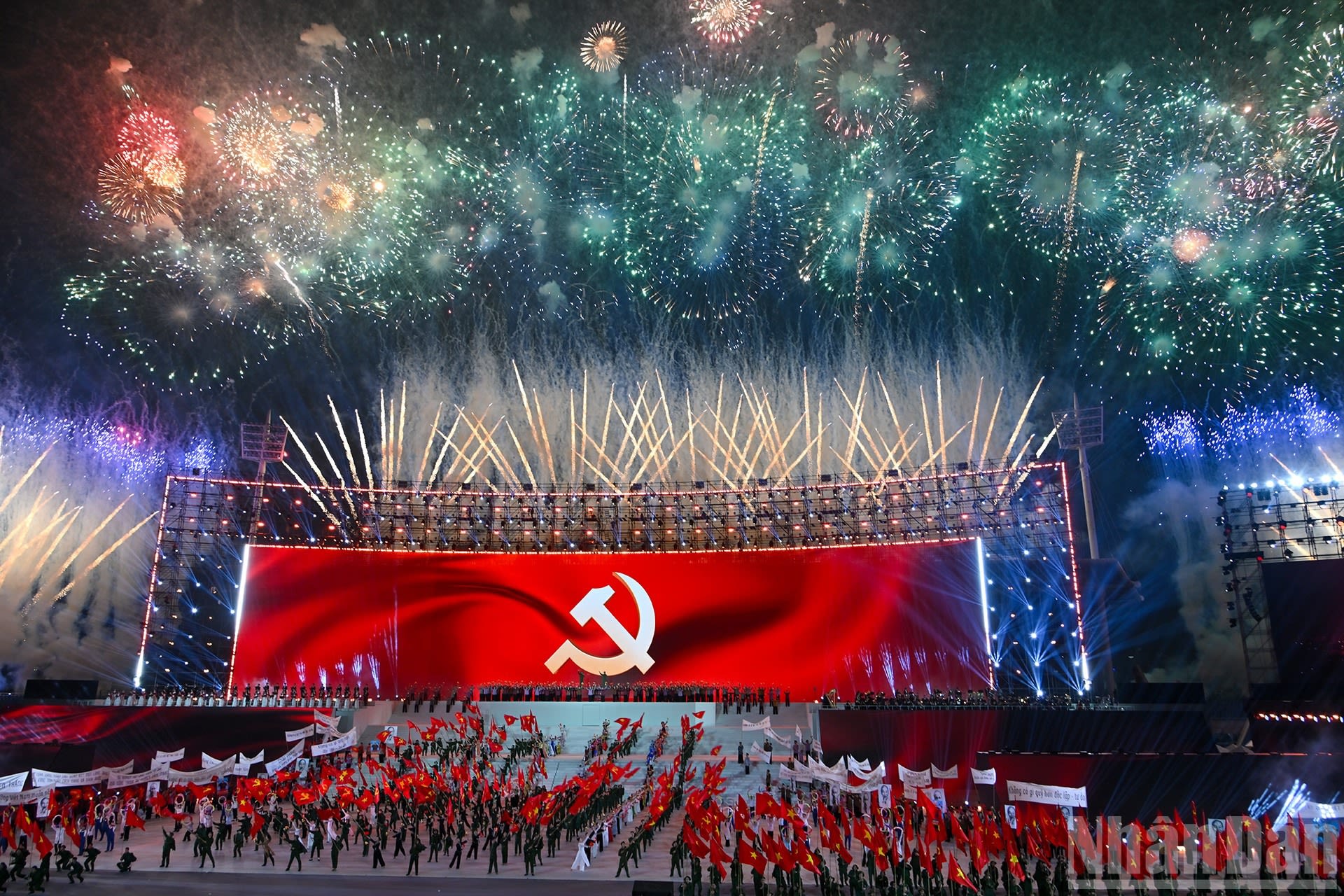
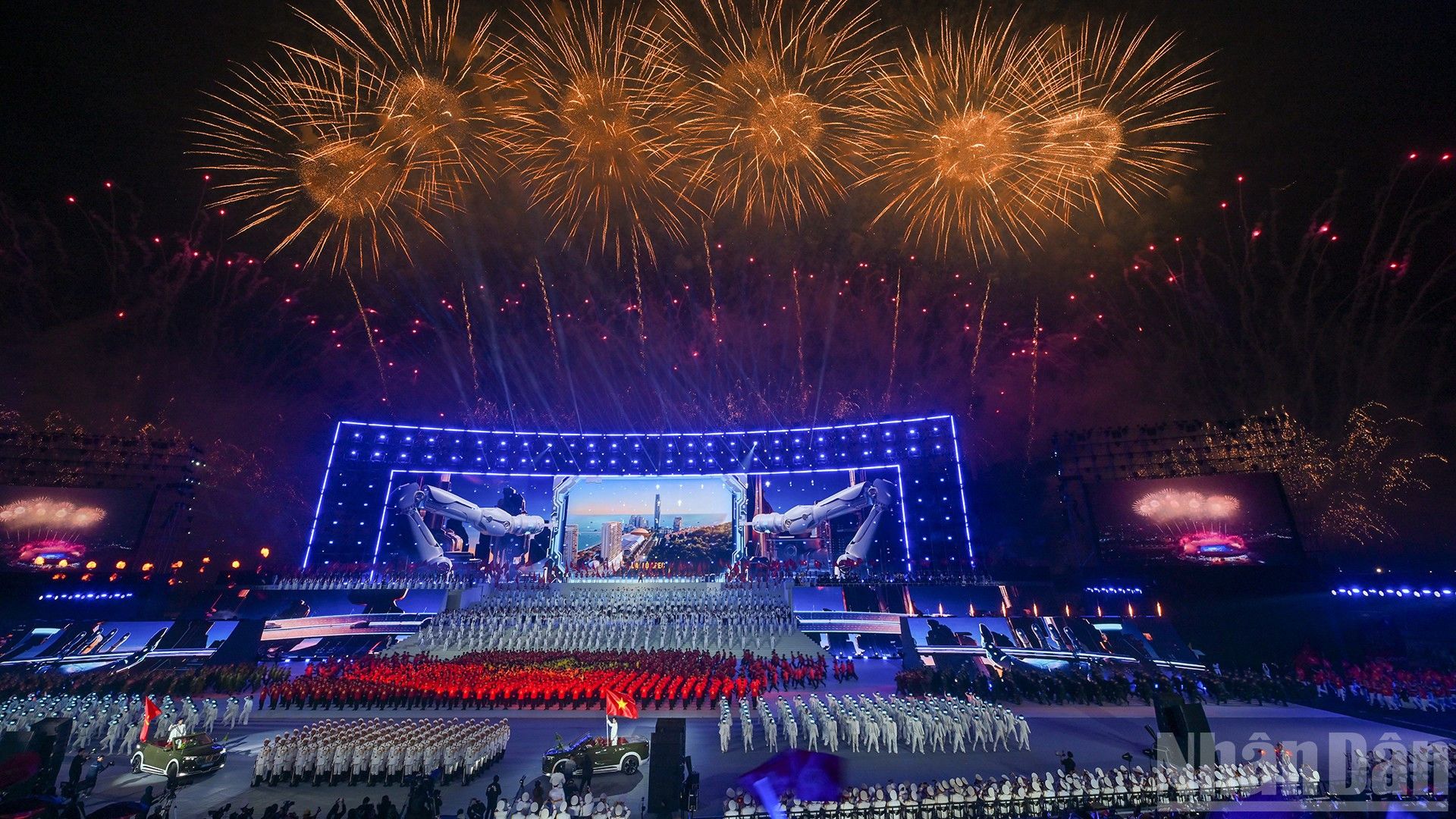
Fireworks light up the sky over Ha Noi in celebration of the successful 14th National Party Congress.
Fireworks light up the sky over Ha Noi in celebration of the successful 14th National Party Congress.
3. Innovating implementation methods with a modern governance mindset
A very important requirement is to shift decisively from administrative management to a modern development-governance mindset. The Resolution cannot be implemented in general terms; it must be translated into specific programmes, schemes, projects, products, and measurable outcomes. Each task must have clear objectives, a clear roadmap, clear resources, clear accountability, and clear results and effectiveness.
Final outcomes must be the yardstick for assessing officials’ capacity and qualities, not formalistic reports. Strong application is needed of data-driven governance, digital transformation in management, and key performance indicators (KPIs) for effectiveness assessment.
This, in turn, ensures fewer words and more action; follow-through to the end; concrete deliverables for the people to benefit from; and the people’s satisfaction as the yardstick for the capacity and integrity of each official, each Party member, and each agency across the political system.
4. Making science, technology, innovation and digital transformation the leading mode of action
Rolling out the Resolution in the digital era is not just about using technology; it is about reshaping the entire way the country is governed—digital government, the digital economy, a digital society and data-driven governance. Everything from investment management and budget operations to public services and oversight of officials must be digitised and made transparent. Viet Nam has already undertaken a major reform of the political system’s organisational apparatus, aligned with the rise of digital technologies. That is why digital transformation—especially in two-tier local administrations—is the decisive condition for improving how effectively and efficiently the system functions.
Only when governance is based on data and technology can we reduce costs, increase efficiency, prevent wrongdoing, and serve the people better. In that way, the people’s happiness and the fulfilment of tasks by authorities at all levels can be ensured in a far more transparent, concrete and effective manner.

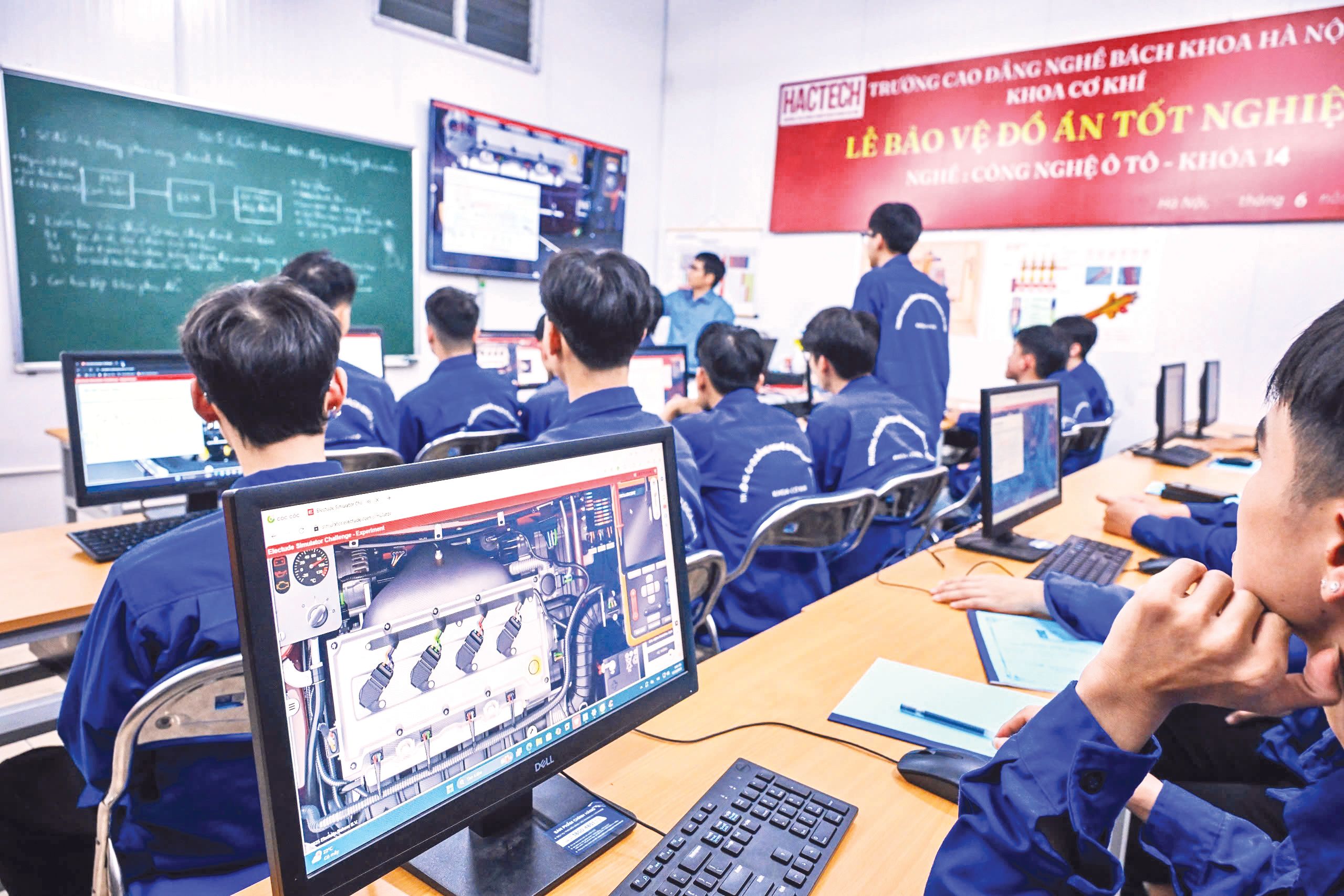
Applying AI in vocational training for automotive technology. (Photo: THANH DAT)
Applying AI in vocational training for automotive technology. (Photo: THANH DAT)
5. Building the cadre contingent: the decisive factor behind every decision
Finally—and most importantly—people remain the decisive factor. Practice has shown that however correct the line may be, weak cadres will not deliver success; conversely, good cadres can turn a correct and reasonable policy into a feat. Therefore, special emphasis must be placed on selecting, training and developing cadres; strengthening the exemplary responsibility of heads of agencies; resolutely combating corruption, wrongdoing and vested interests; and implementing a “in-and-out, up-and-down” mechanism.
Cadres in the new period must have strategic vision, modern governance capacity, and the courage to innovate—daring to think, daring to do, and daring to take responsibility for the common good. Only when each cadre truly becomes a “core of action” can the Resolution truly be brought in life.
6. The overarching spirit: action – determination – effectiveness
Implementing the Resolution of the 14th National Party Congress requires a new spirit: faster, more determined, more creative, and more effective. There can be no acceptance of stagnation, avoidance of responsibility, or much talk with little action. Every level, every sector and every locality must ask: What have we done concretely to realise the congress’s goals? The success of the Congress is not measured by words, but by economic growth, the people’s quality of life, social trust, and Viet Nam’s standing in the international arena.
It can be summarised concisely, as General Secretary To Lam concluded in the document report submitted to the congress: “With high unity in thought; determination in action; strict discipline; and the people truly at the centre, we will certainly turn aspiration into reality; drive the country forward strongly and steadily in the era of national rise, advancing towards socialism.”

Published: February 2026
Design: Xuan Bach - Ngo Huong
Photos: NDO
 Built with Shorthand